Commercial · Dorset Park
Access Control Installation in Dorset Park
Another employee left and the keys never came back.
In plain words
Where a building has more than one controlled door, a networked system lets each opening run its own schedule: the front office unlocked for regular hours, a stockroom open to two people only, a loading dock released for a delivery window, with the management software tying those schedules together. A shared entrance in a multi-tenant building can carry each tenant's own credentials without giving one business access to another's suite, and the same platform keeps a combined log, so a manager checking last night's entries never has to walk the building door by door.
How the visit goesDeliveries arrive before anyone is scheduled to be there, which right now means either propping the loading dock open at dawn or handing a key to a driver you have never met.
Access Control Installation
How the visit goes
Taking stock of what is already on the doors
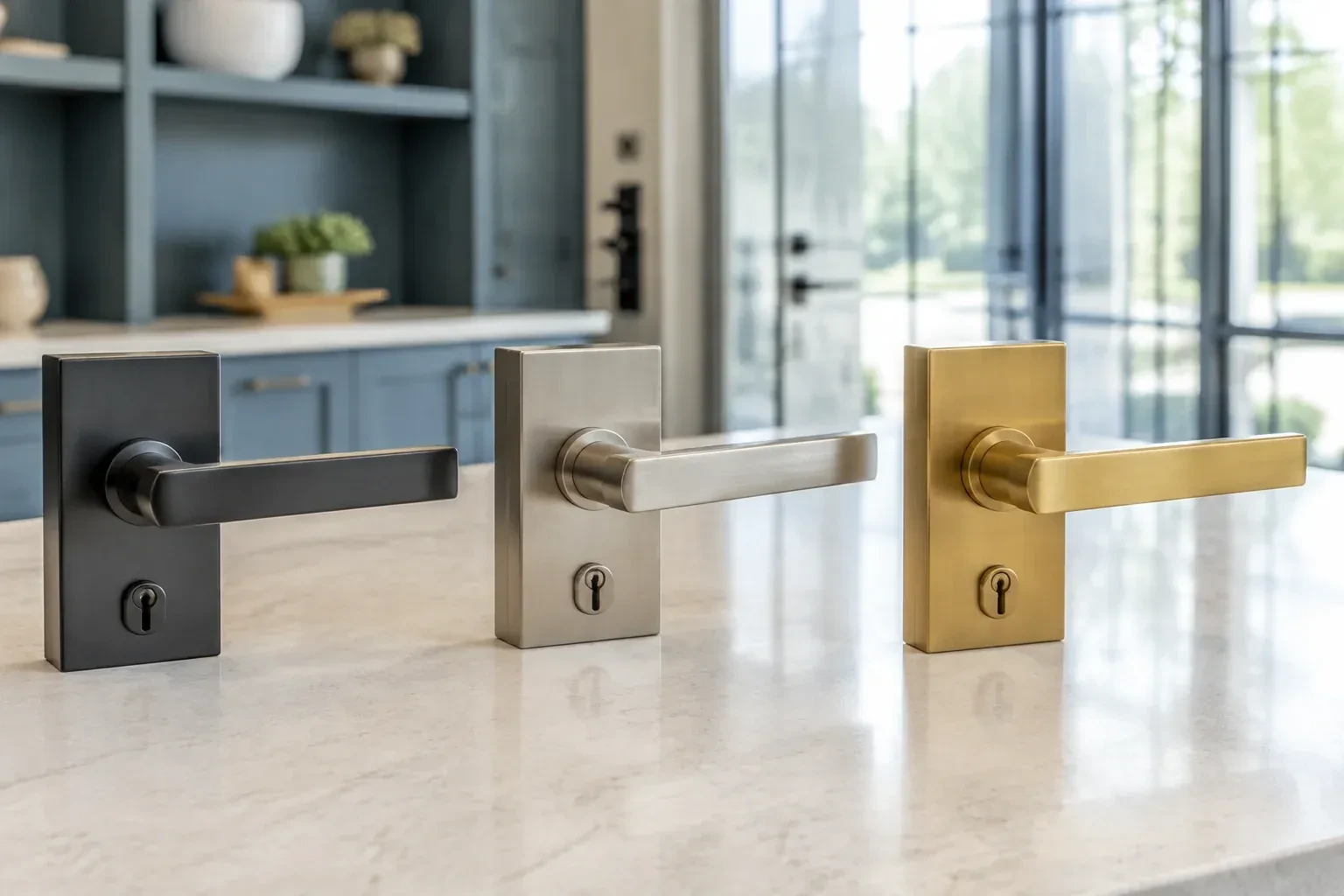
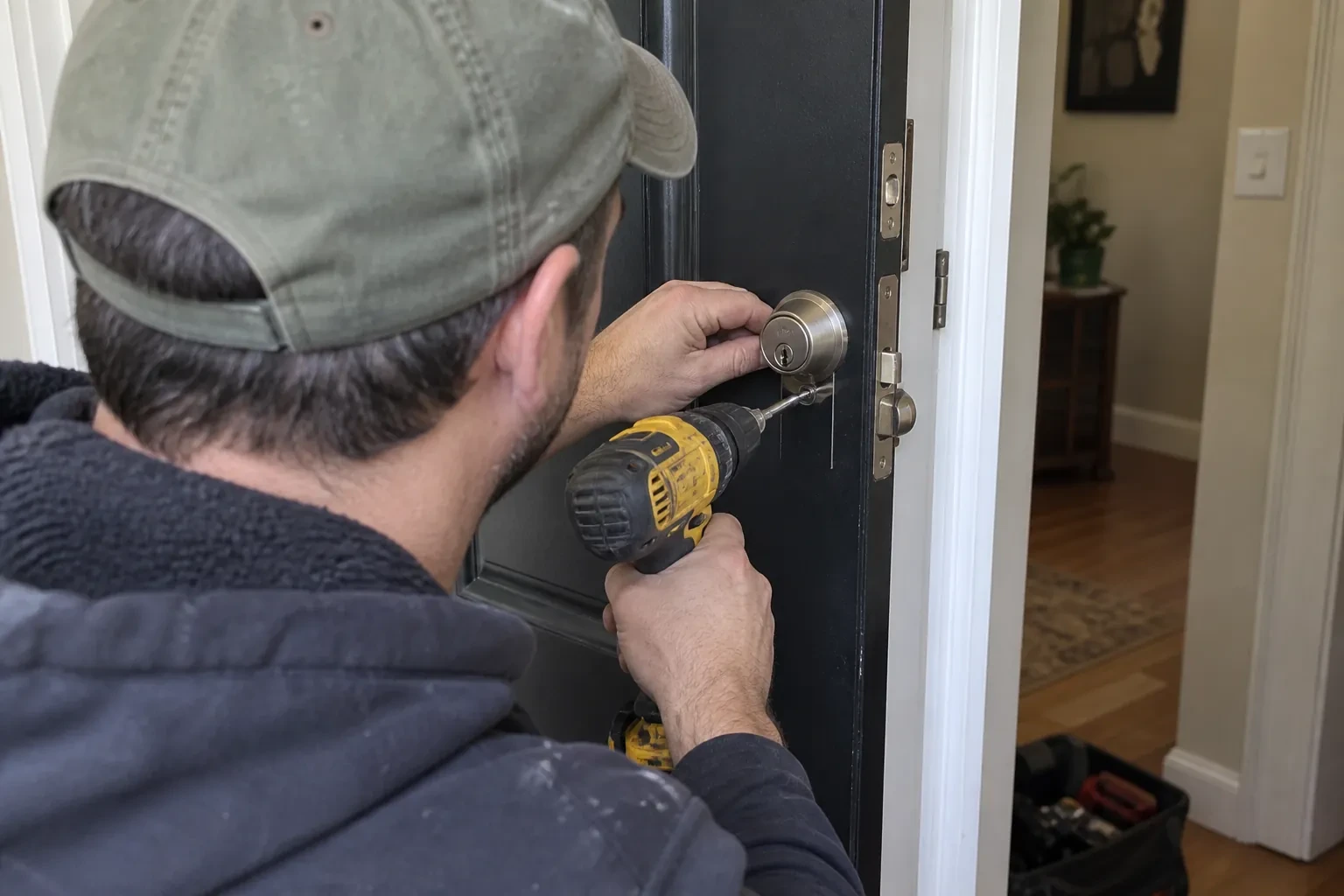
Many commercial buildings already carry some kind of lock, from a plain keyed lever to an older keypad system nobody quite trusts anymore, and the survey starts by identifying exactly what that is. A working mechanical lock can often stay in place as the override once an electric strike or reader is added, saving a step; a failing or unsupported electronic lock is usually replaced outright rather than wired around. The locksmith also checks which doors currently share one key, since that pattern often explains why the business wants individual, revocable credentials in the first place.
Fitting an electric strike
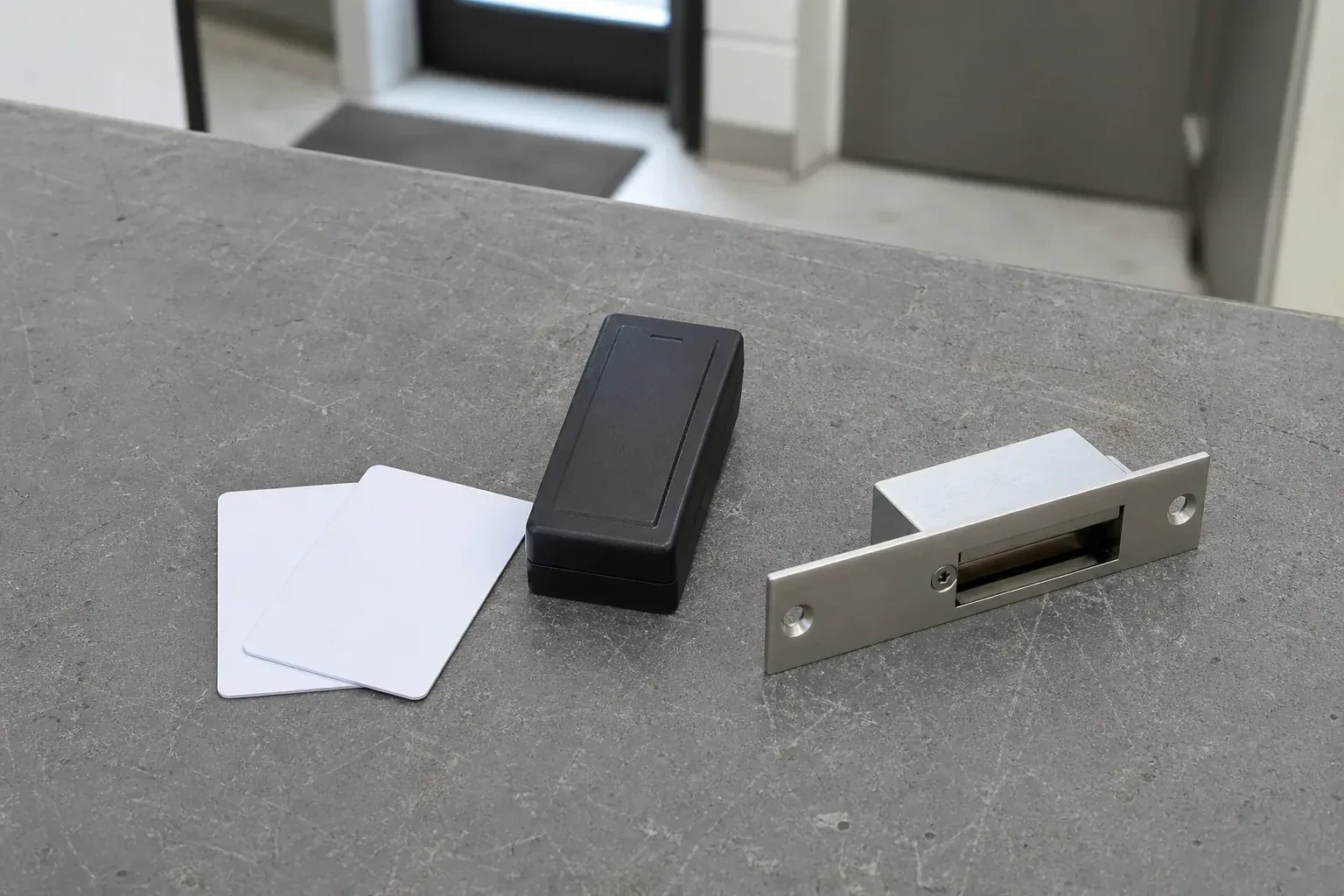
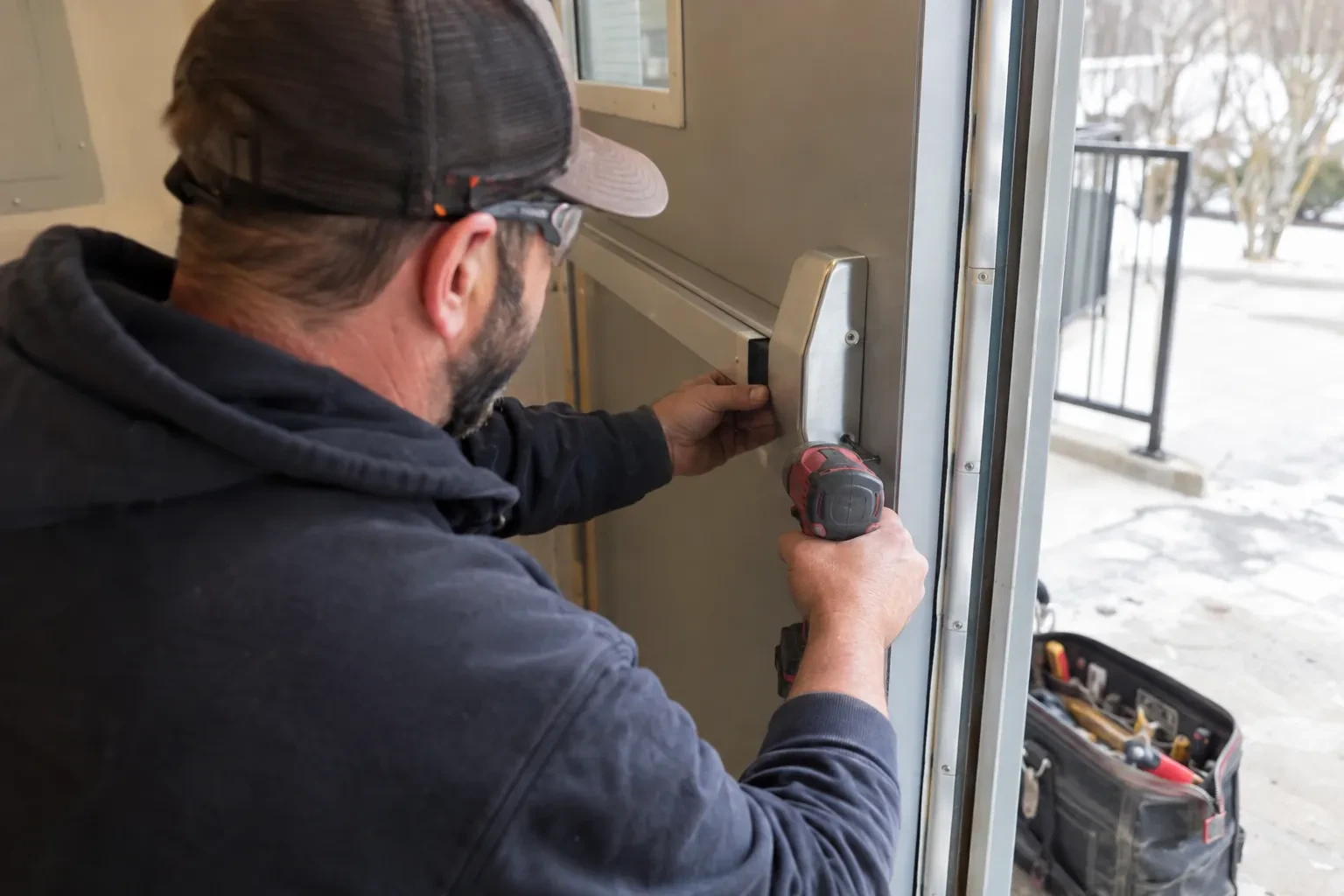
Where the frame allows it, an electric strike replaces the fixed keeper the latch normally strikes against, so the door keeps its existing latch and lockset and simply releases the strike plate when a valid credential is presented. The locksmith mortises the frame to fit the strike body, runs a low-voltage cable within the frame or jamb back to the controller, and sets the strike to hold the door secure until the controller sends a release signal. Because the latch itself never changes, the door still closes and locks normally by hand at any time, credential or no credential.
What the system adds to the rest of the building's security
Once the installation settles into daily use, its value tends to show up alongside whatever else the business already runs: an alarm event that lines up with the person who unlocked the door that morning, a camera clip that can be matched to a specific credential instead of just a timestamp, or a plain answer, finally, to who was in the building last weekend. Getting there can mean linking the access system to the alarm panel or the camera platform, which sometimes calls for extra configuration or an integration licence beyond the original installation, but the controller and the log it already keeps are the starting point either way.
Access Control Installation
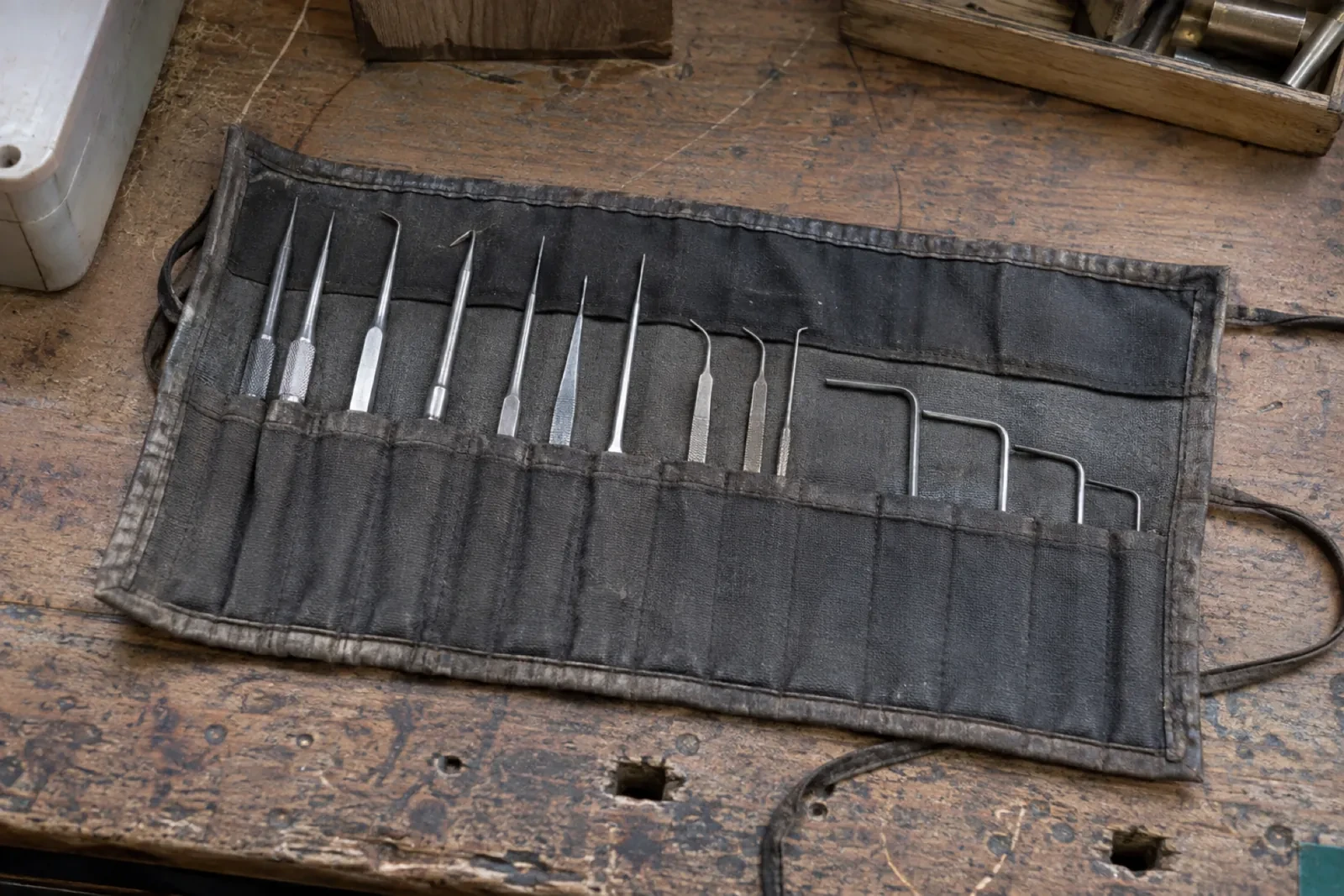
In the van
Card and fob readers
Door position switches
Low-voltage cable
Keypad readers
Credential cards and fobs
Access Control Installation
What affects the quote
How many doors are being controlled
A single entrance and a building with a dozen openings are different jobs in scale rather than kind, and the number of doors, readers and locks involved is the largest single factor in sizing the work.
The building's age and frame material
A modern hollow metal frame generally accepts new hardware with less adjustment than an older wood frame or a historic building, where matching the existing appearance and construction takes extra care.
Power supply and backup sizing
A power supply and battery backup have to be sized to the number of doors and locks they support, and a building with several openings on one controller needs a larger supply than a single standalone unit.
What to have ready
- Roughly how many people will need a credential to enter?
- Do you already have an alarm or camera system in place?
- Which doors do you want to control with the new system?
Access Control Installation: questions
QuestionsCan the system be expanded to more doors later?
Yes. A system installed with some spare capacity in its controller and power supply can usually take another door or two by adding a reader and lock and wiring it back in. A door far from the existing wiring can instead run its own standalone unit. Either way, existing schedules and credentials do not need to be rebuilt from scratch.
Can different doors run on different schedules?
Yes, and this is one of the more useful parts of the system. A front office can unlock for regular business hours, a stockroom can allow only two credentials at any hour, and a loading dock can release only during a set delivery window. Schedules are set per door and per access level in the controller, and can be changed at any time without touching the hardware itself.
Can access control be added to just one door, or does it have to cover the whole building?
A single door with its own standalone reader is a complete installation on its own, and plenty of businesses start there. If more doors need controlling later, a networked controller can be added at that point, or the building can simply add another standalone unit. Nothing about starting small commits the business to expanding, and nothing about a single-door job rules out growing the system later.
Related services
- Master Key System DesignA dental office wants the front desk to lock up at night without ever holding a key to the room where patient records and controlled supplies are stored.
- Panic & Exit HardwareTwo doors used to swing as a pair at the community hall entrance, but one leaf has started closing before the other, catching the astragal and leaving a gap wide enough to worry the caretaker.
- Commercial-Grade Lock ReplacementA new tenant moved into the unit next door, and the property manager just found three different cylinders on three doors, none of them cut to the same key.