Commercial
Commercial Locks
Keys for a business should be a record, not a rumour. Master key systems and restricted keyways make it possible to know how many keys exist and who holds each. The commercial pages explain how we set that record up and keep it accurate.
Which one do I need?
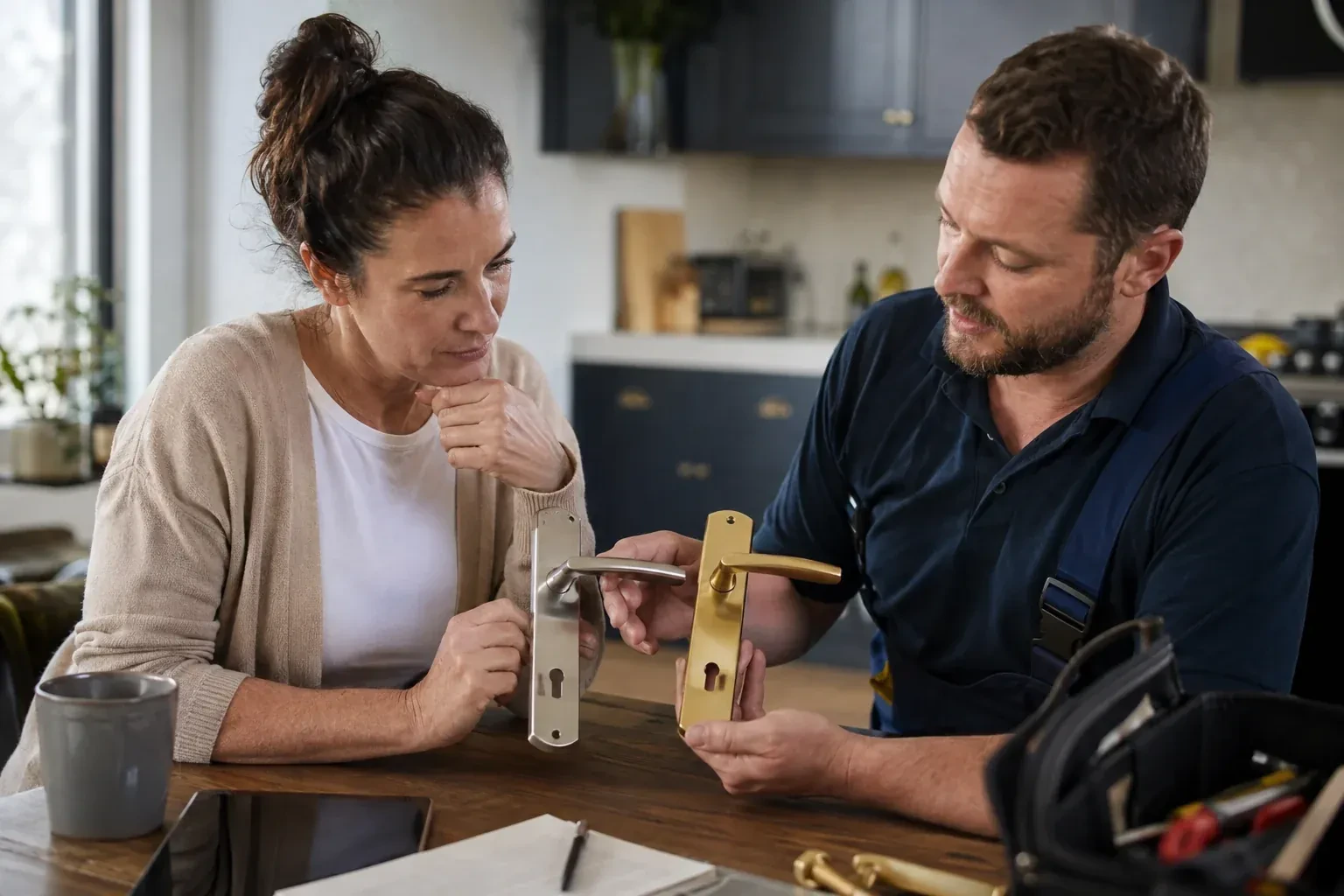
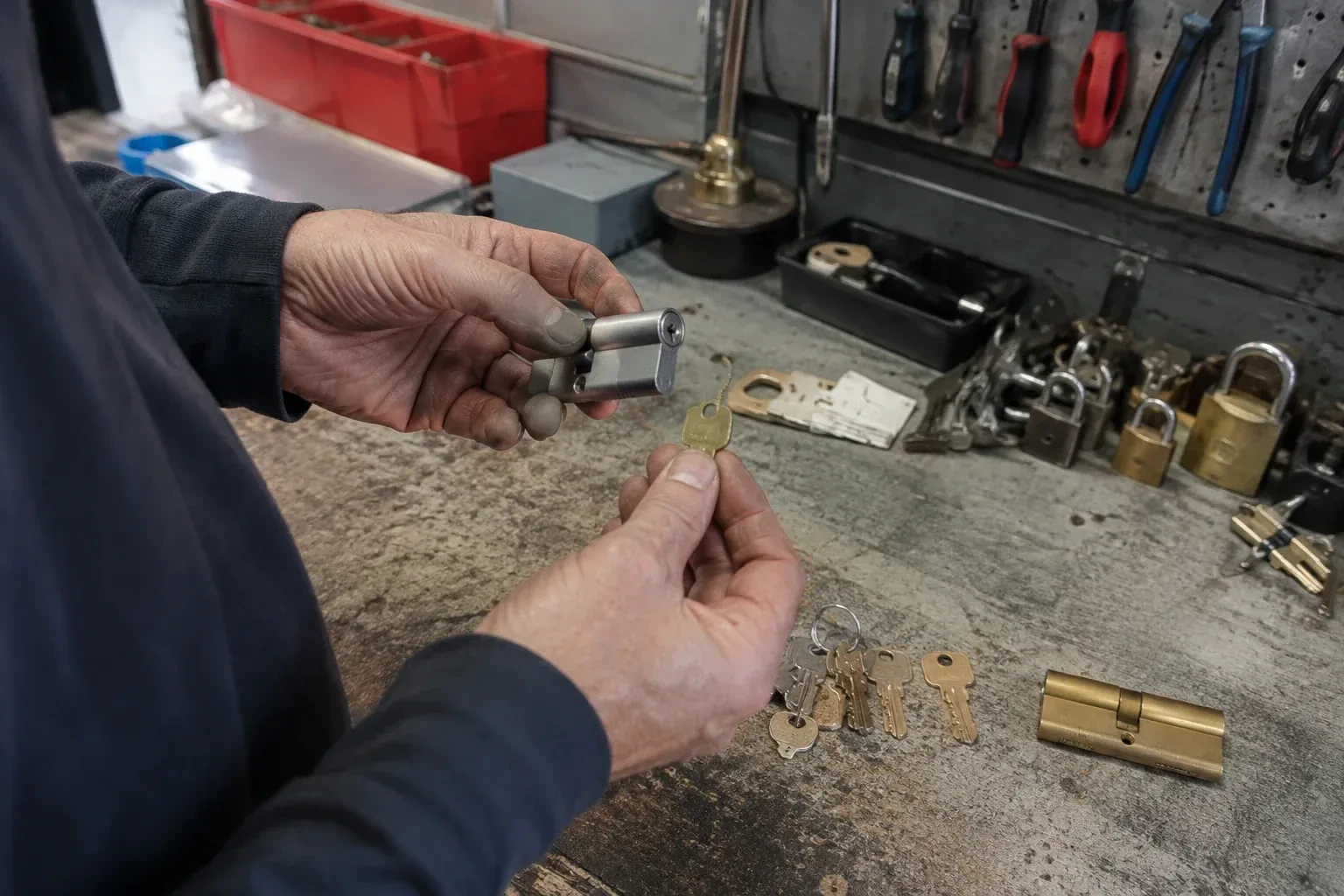
- The office has been reshuffled twice since the locks were last touched.Commercial Rekeying
- A dental office wants the front desk to lock up at night without ever holding a key to the room where patient records and controlled supplies are stored.Master Key System Design
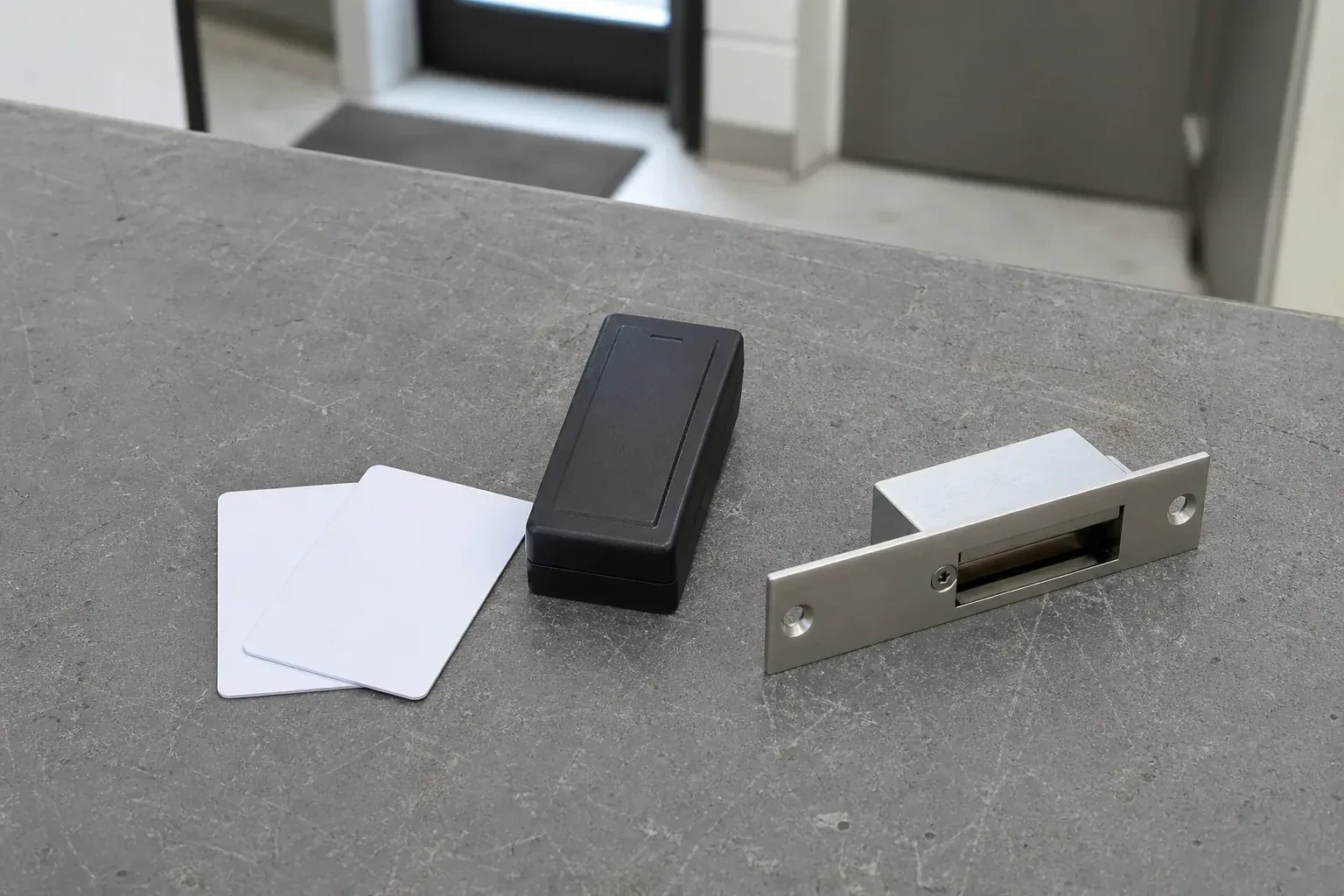
- Another employee left and the keys never came back.Access Control Installation
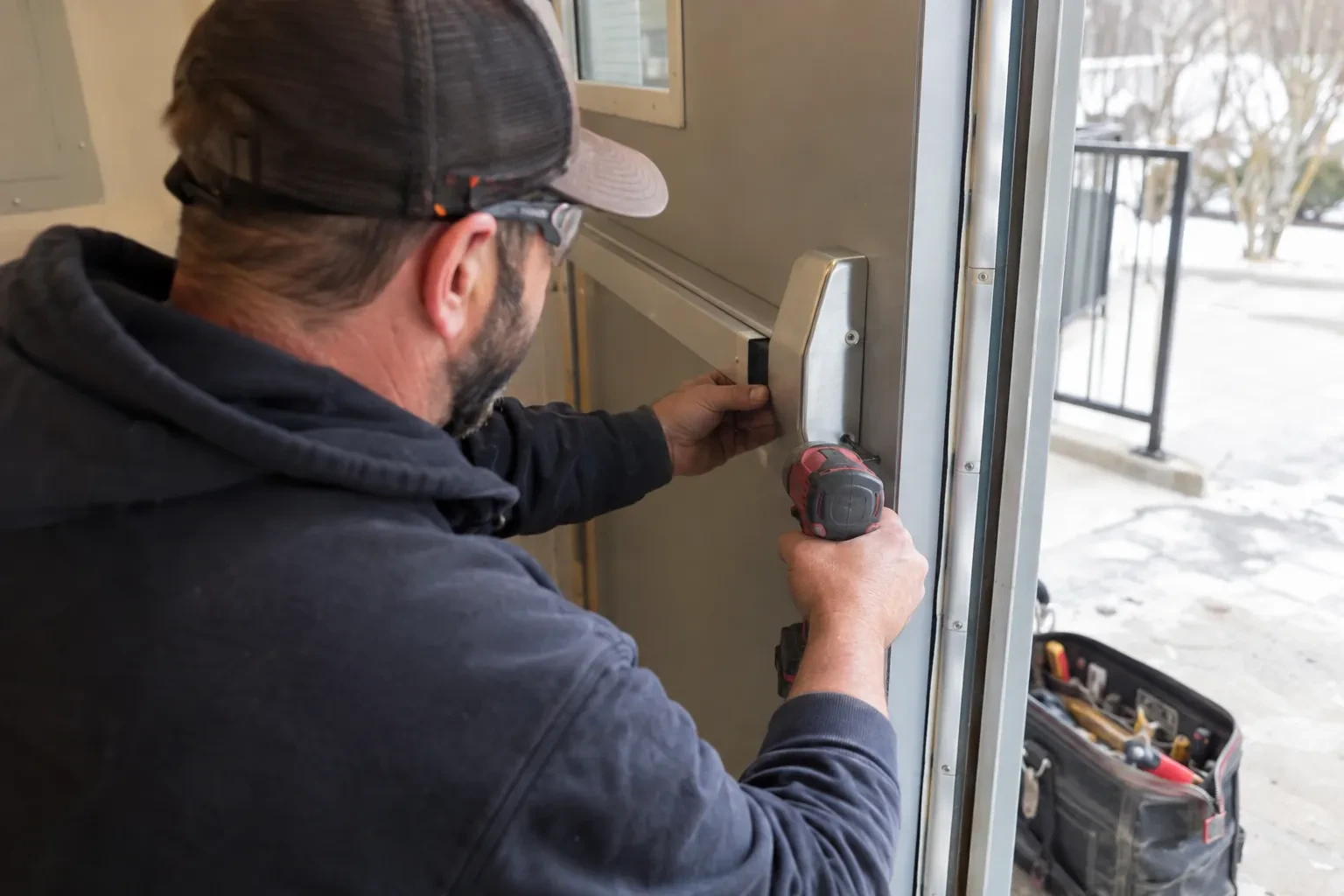
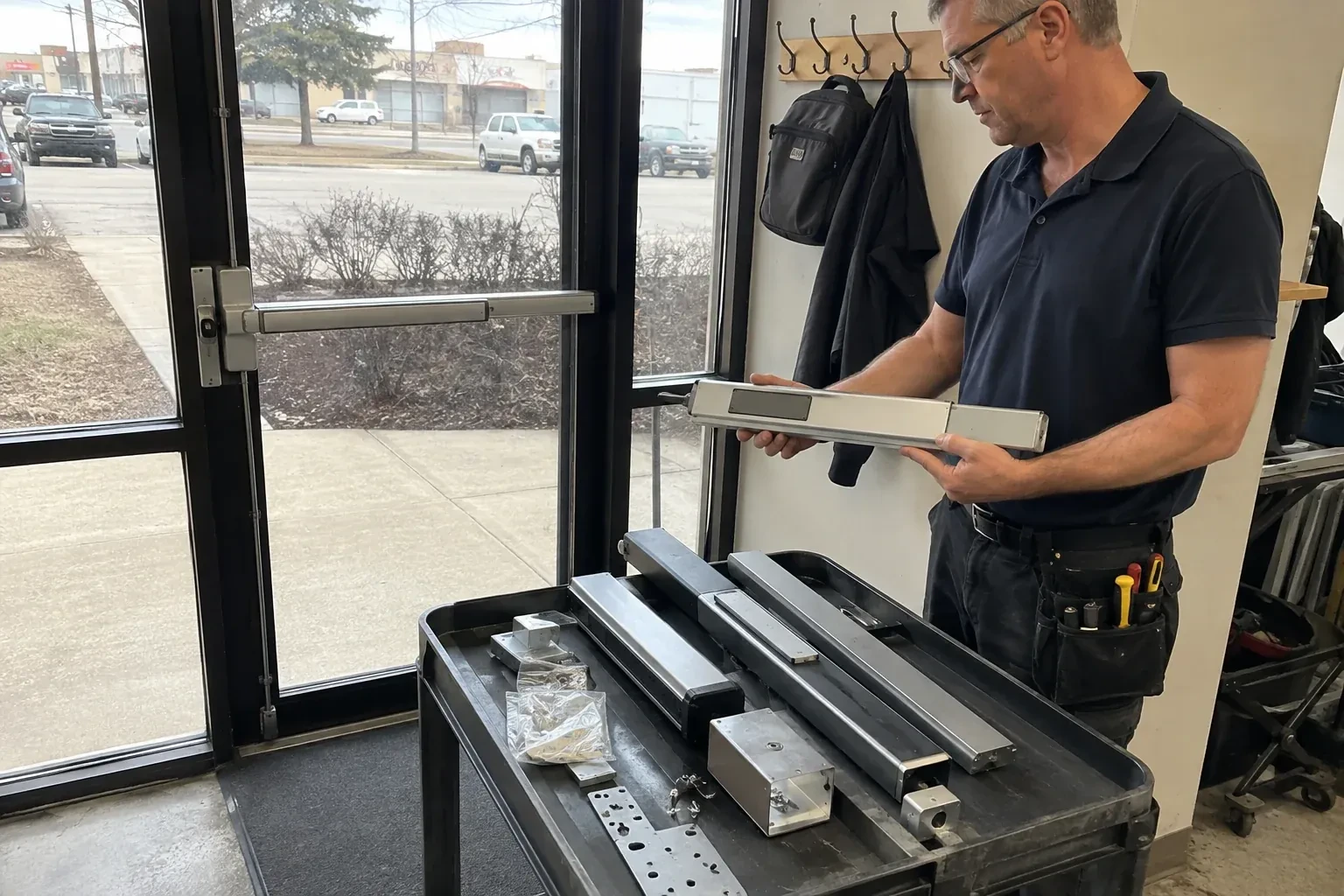
- Two doors used to swing as a pair at the community hall entrance, but one leaf has started closing before the other, catching the astragal and leaving a gap wide enough to worry the caretaker.Panic & Exit Hardware
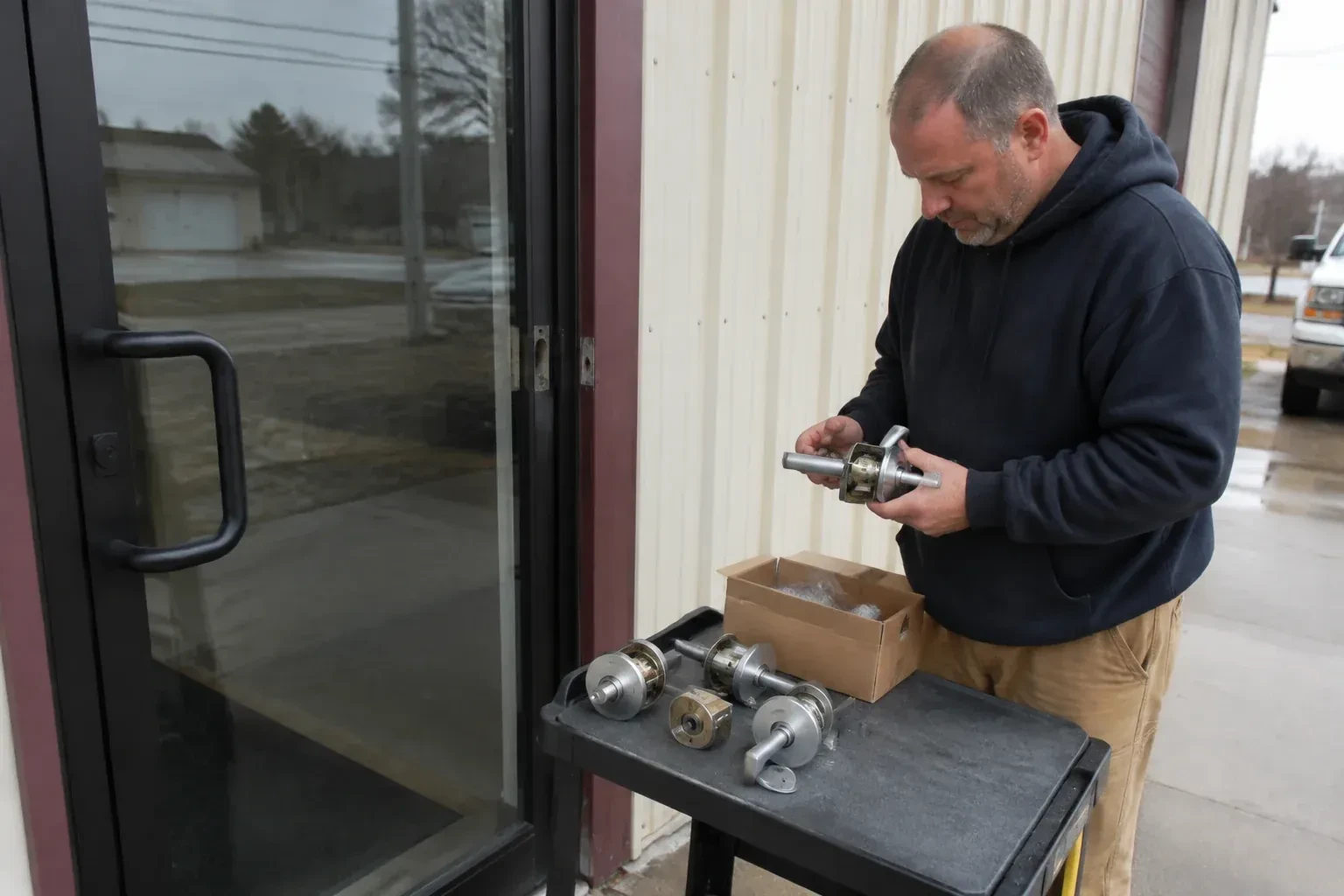
- A new tenant moved into the unit next door, and the property manager just found three different cylinders on three doors, none of them cut to the same key.Commercial-Grade Lock Replacement
Commercial Locks
Locks for shops, offices and buildings: rekeying at turnover, commercial-grade hardware, exit devices, master key systems and access control.

Commercial Rekeying
Which doors are the landlord's
In a plaza, an office building or a multi-tenant industrial unit, some doors on your floor plan are not yours to rekey. Corridor doors, electrical and mechanical rooms, shared loading doors and the building's fire exits usually sit on the landlord's master system, and a suite entrance may be required to accept the landlord's key as well as yours. The locksmith sorts the openings into two columns before starting: those the lease puts under your control, which get the new plan, and those that stay as they are or need the property manager's say-so.
Where a suite door must accept both a tenant key and the building master, it is pinned to do exactly that.