Car keys · Toronto
Transponder Key Programming
Every key that ever opened the car is gone at once, one taken with a stolen bag, the spare misplaced months ago and never replaced.
In plain words
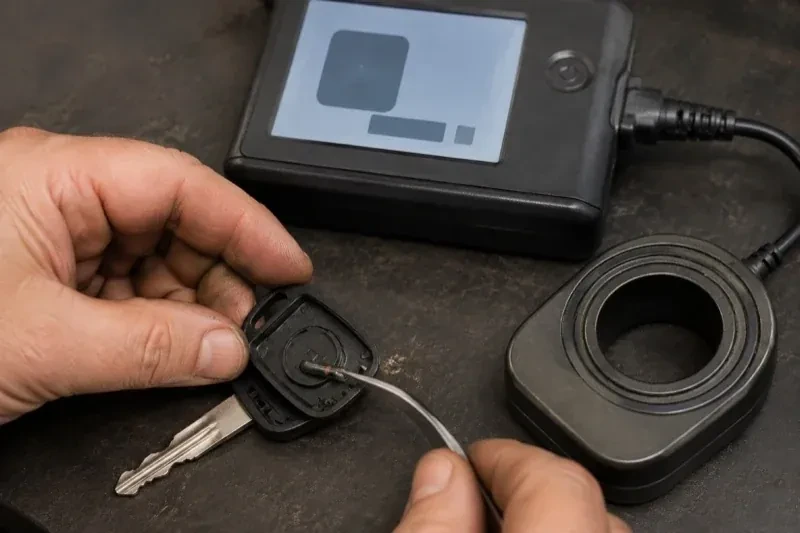
There are really two separate keys hiding inside one piece of metal and plastic: the cut, which is entirely mechanical and opens doors and turns cylinders, and the code, which is electronic and tells the immobilizer to allow the engine to run. A key can be perfectly cut and still leave a car cranking without starting if the code was never written. Programming is the part of the job that handles the code, using equipment built to read and write the exact system fitted to that vehicle.
How the visit goesThe car came with a single key when the sale went through, and that key is the only thing standing between the household and being stranded. A second one has been on the list for weeks, quietly moved down every time something more urgent came up.
Transponder Key Programming
How the visit goes
What the finished set should look like
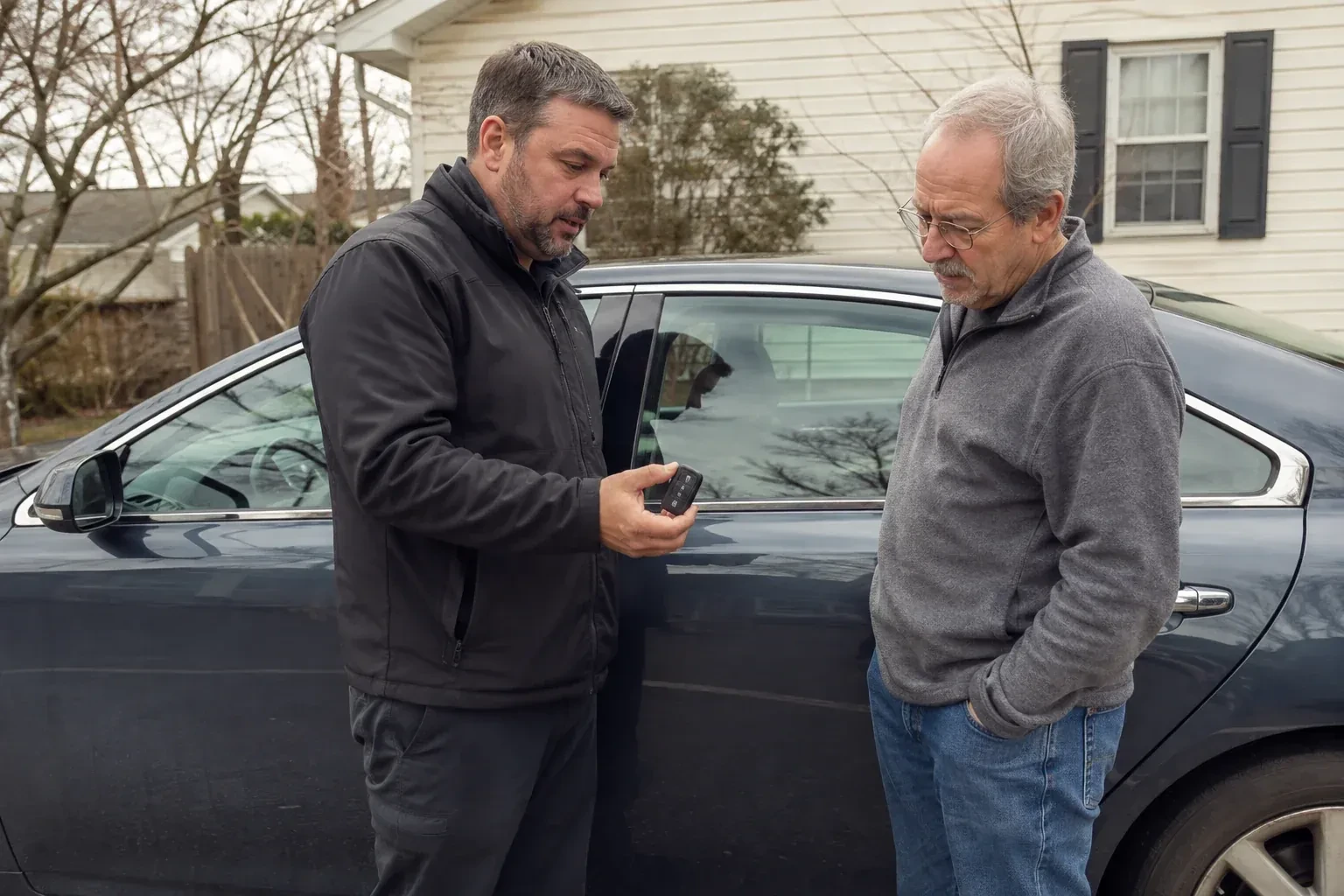
Not every visit ends the same way. Someone who lost their only key wants a working replacement and nothing more. A family adding a driver wants an extra key without disturbing the ones already in daily use. Someone who has never had a spare wants one made and proven before it is ever needed. Asking how many keys should work afterward, and for whom, shapes the whole visit before a single tool comes out, and it is answered in plain terms rather than assumed.
Programming through the diagnostic port
On most vehicles, the new chip's identity is written into the immobilizer through the onboard diagnostic port using equipment built for that vehicle's own protocol. The programmer talks to the vehicle's module in its own language, adds the new key without erasing the others unless asked, and confirms the write was accepted before the tool disconnects. This is the routine path for a spare, an extra key, or a straightforward replacement where at least one working key is still available to authorize the addition.
Ready for the next cold snap
A fob that survived one winter will not necessarily survive the next one on the same battery, since cold weather is genuinely harder on a battery that was already getting weak. Testing it before the temperature drops, rather than after it has already failed on a frozen morning, catches a fading battery while replacing it is still a small errand rather than an unplanned one. The metal blade inside a proximity fob does not mind the cold at all, which is exactly why it is worth knowing where it is.
Transponder Key Programming
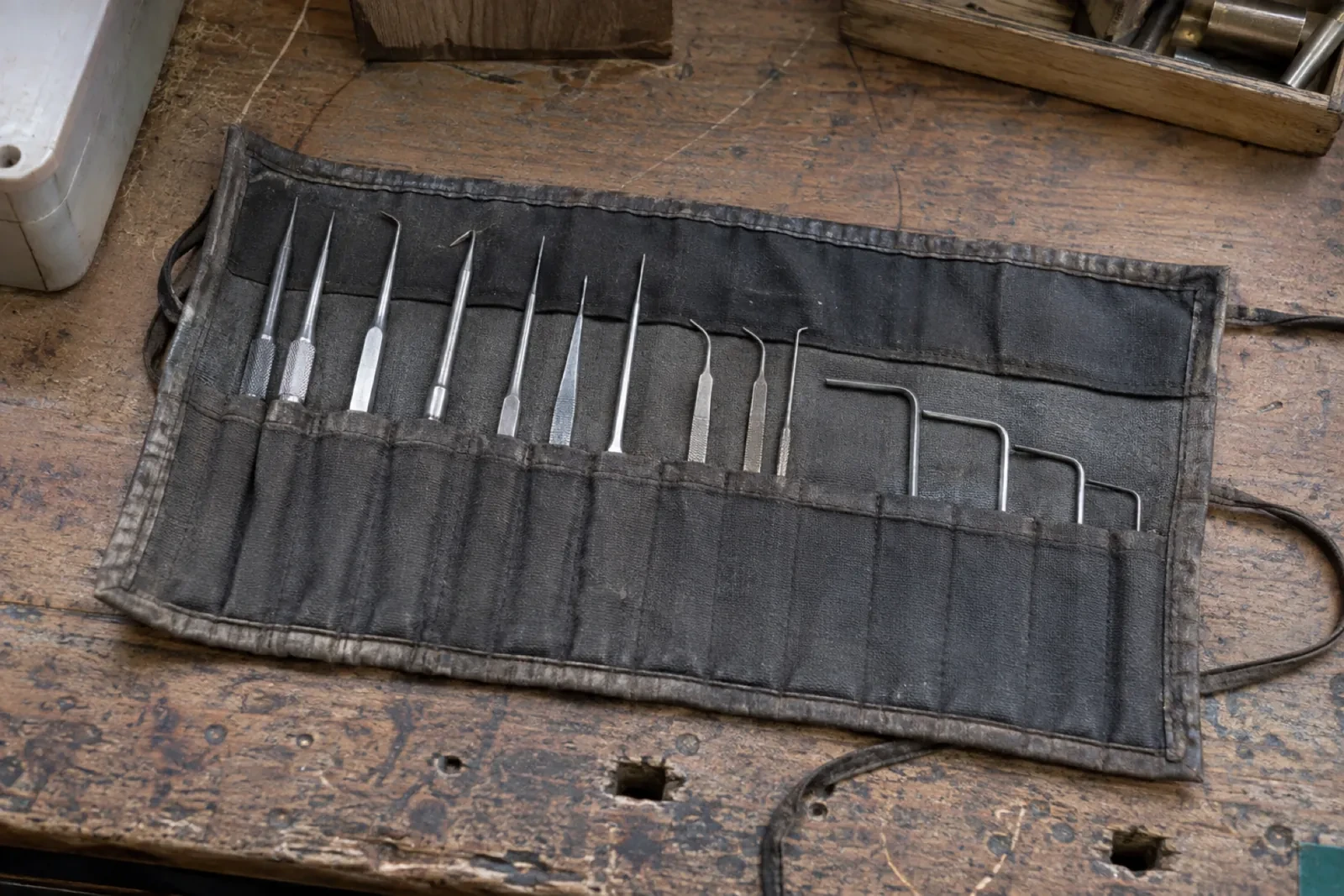
In the van
Emergency insert blade
Fob battery
VIN reference tool
Frequency test reader
Proximity smart key
Transponder Key Programming
What affects the quote
Type of key: blade, remote-head or proximity
A basic transponder blade, a remote-head key with buttons, and a push-button proximity key each involve a different amount of pairing beyond the immobilizer chip itself, which affects both the parts involved and the time the visit takes.
Fob battery or housing replacement
A fob with a failing battery, cracked buttons, or a worn housing may need that hardware replaced alongside the programming, which is identified during the initial check of the key rather than assumed either way.
Manufacturer-gated security access some newer vehicles require
A number of newer vehicles require an additional secure session with the manufacturer's own network before a key can be added, which is a real step in the process on those models rather than an optional add-on.
What to have ready
- Do you have the vehicle permit or registration on hand?
- What is the year, make and model of the vehicle?
- Is the key a basic blade, a remote-head, or push-button proximity?
Transponder Key Programming: questions
QuestionsCan a push-button, proximity-style key be programmed the same way?
Yes, though there is usually more to pair afterward: the proximity functions that let the vehicle detect the key nearby, alongside the same immobilizer identity a traditional transponder key would carry. The visit still ends with the same test, confirming the engine starts and the vehicle recognizes the key at a normal walking distance.
What's the difference between a transponder key and a key fob?
The transponder is the passive chip that talks to the immobilizer and lets the engine start; it needs no battery of its own. The fob is the separate, battery-powered piece that handles remote locking, unlocking and alarm functions. Many modern keys combine both in one housing, but they answer two different systems, which is why a fob with a dead battery can still start the car with its mechanical blade.
What does a flashing security light on the dashboard usually mean?
Most commonly it means the immobilizer does not recognize the key currently in the ignition, whether because the chip has failed, the key was never programmed, or the vehicle's module is looking for a different identity than the one it is being shown. It is a useful, specific signal rather than a general warning, and it points fairly directly at a transponder issue.
Related services
- Car Key ReplacementThe key snapped at the head while you were turning it in a stiff, frosty door lock.
- Spare Car Key DuplicationThe paperwork for the used car changed hands last week, and the previous owner mentioned, almost as an afterthought, that a second key never turned up.
- Key Fob ProgrammingA replacement fob just arrived in its box, shiny and untouched.