Car keys · Toronto
Vehicle Lock Repair
You line the key up with the trunk lock, turn it, and feel nothing catch.
In plain words
Weather leaves its mark on vehicle locks over the years. Worn weatherstripping lets rain and winter brine reach the cylinder, the linkage and the wiring boot at the door hinge, and what starts as a slightly stiff key can turn into a lock that stops responding altogether. Vehicle Lock Repair looks at the seal around the affected door as part of the same visit, since a repaired lock behind a perished seal is likely to face the same moisture again unless the seal is addressed too.
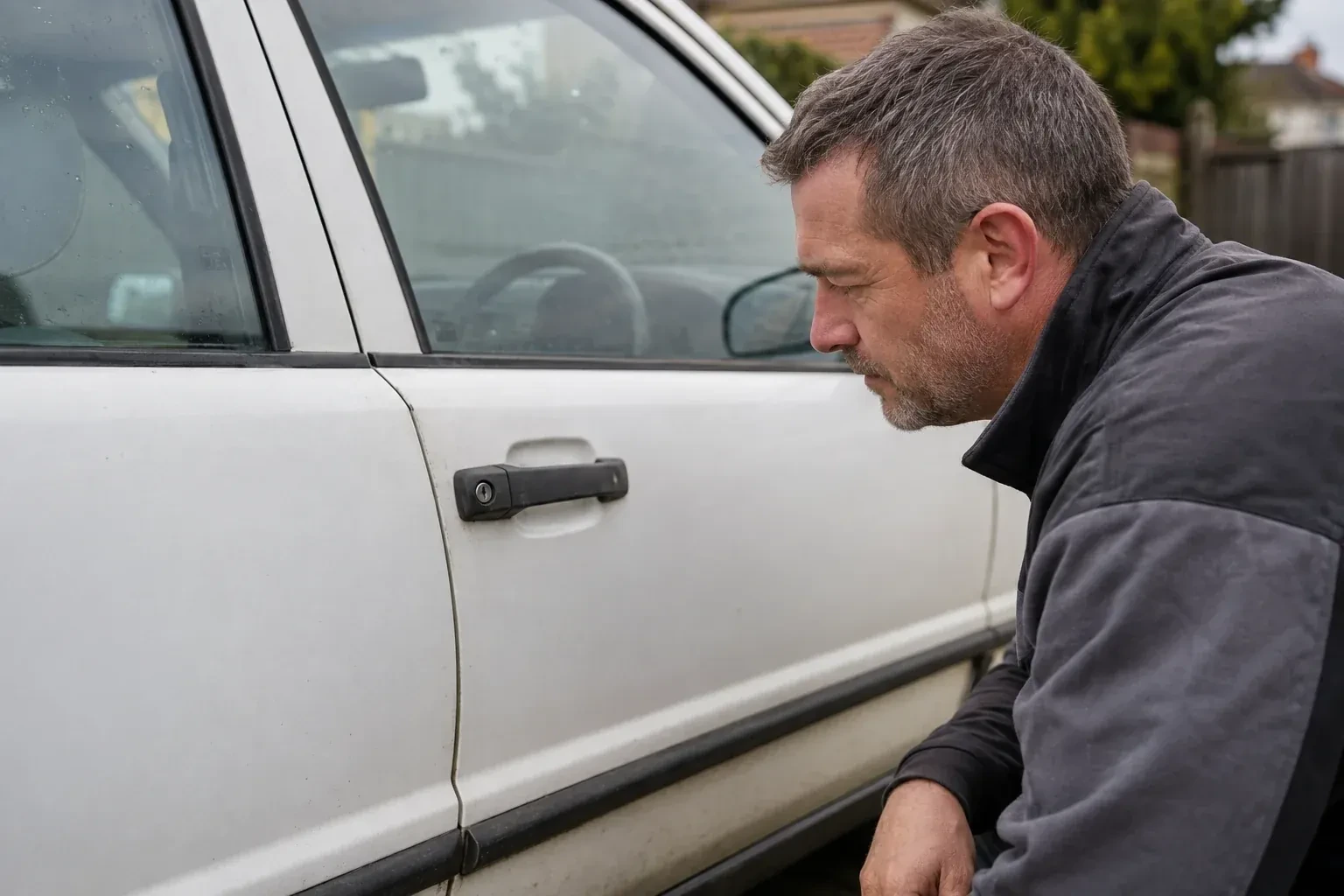
How the visit goesSince the last heavy rain, the front passenger door has needed two or three tries before the key catches, and moisture seems to sit along the seal right where the lock is mounted. Every other door still opens on the first attempt.
Vehicle Lock Repair
How the visit goes
Reading the cylinder and the key together
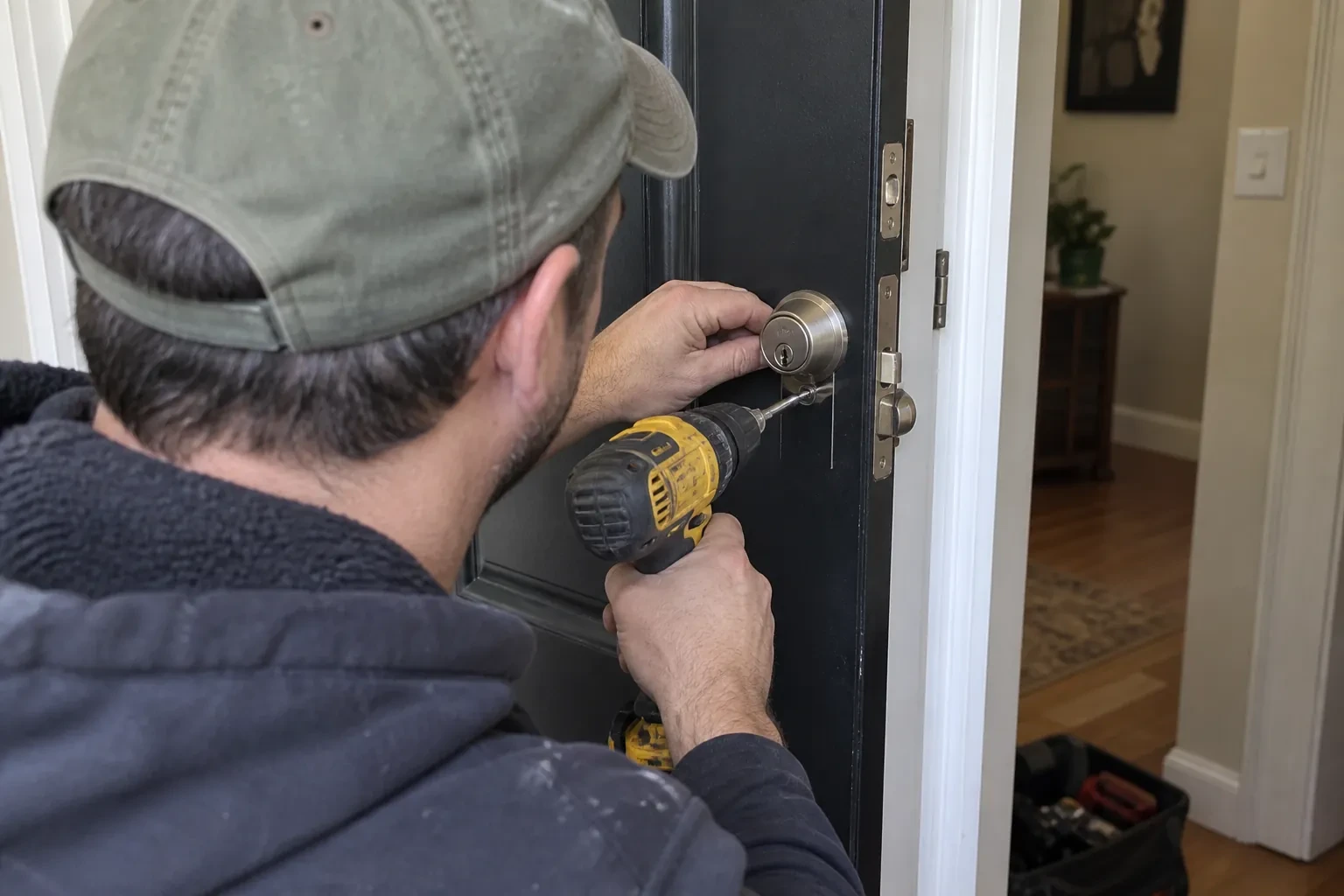
The key itself is part of the diagnosis. A blade that has thinned from years of use, or one cut for a different vehicle years ago and never quite matched, can feel identical to a worn cylinder from the driver's seat. The locksmith checks the key's condition and origin alongside the cylinder's own resistance, since a fresh key cut to the vehicle's code sometimes resolves what first looked like a hardware fault.
Replacing a power lock actuator
A door that answers the key but ignores the remote is checked before any part is named: partial manual-lock position, door fit, cable routing, connectors and harness continuity can restore it without a new part, and only once those are clear does a worn power lock actuator, the small motor that pulls the linkage, become the answer. The locksmith removes the failed unit, connects the replacement to the existing wiring and linkage, and tests it through several full cycles before the panel is closed up, confirming both the switch inside the car and the remote outside it move the lock the same way.
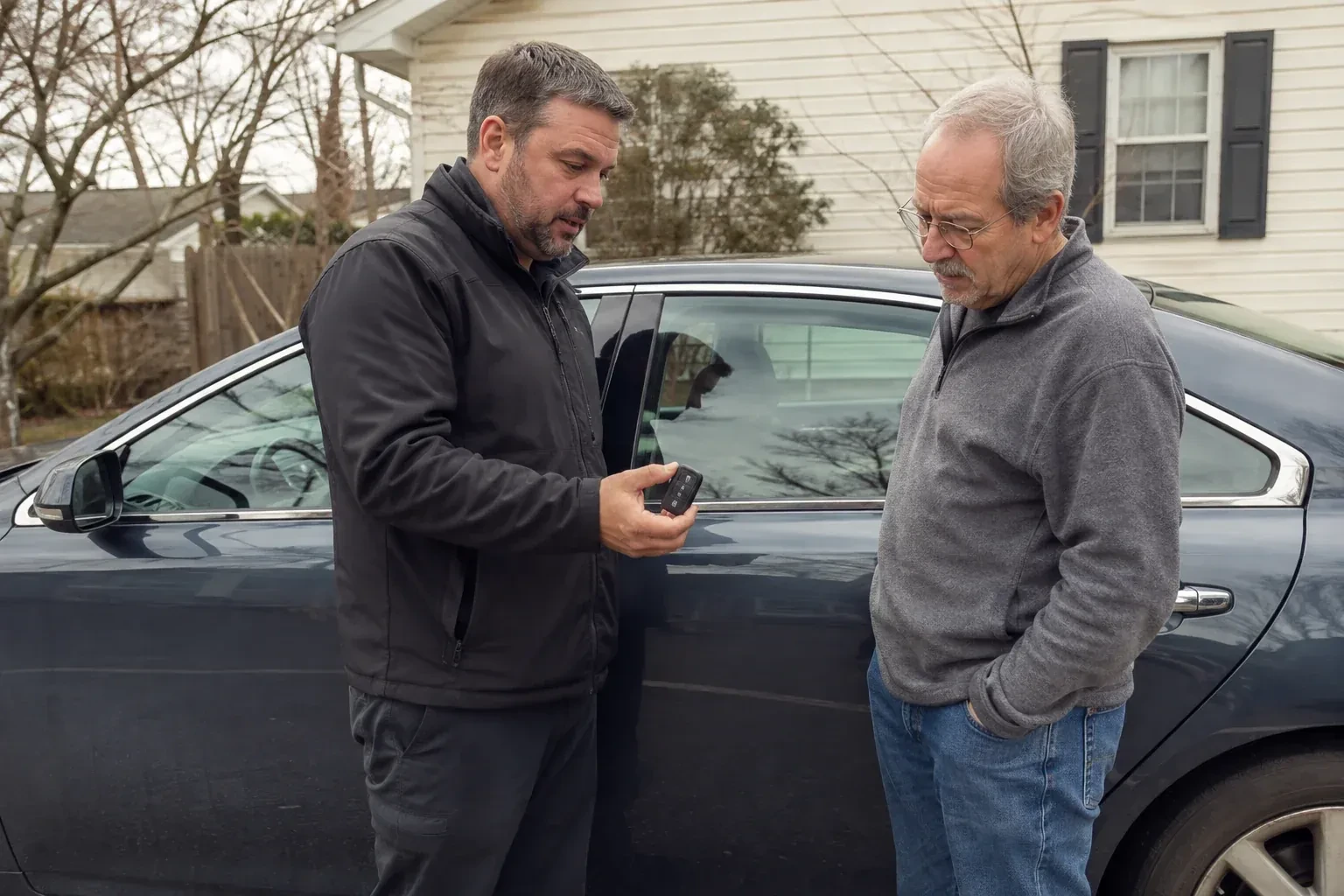
Looking after the key fob going forward
A freshly serviced fob does well with a little care: keep it away from standing water and away from high heat on a dashboard in direct sun, since both shorten a coin battery's life and can affect the case seal. If the battery was replaced during this visit, it is worth noting roughly when, since most fob batteries last a few years and a slow response is often the first sign the next one is due.
Vehicle Lock Repair
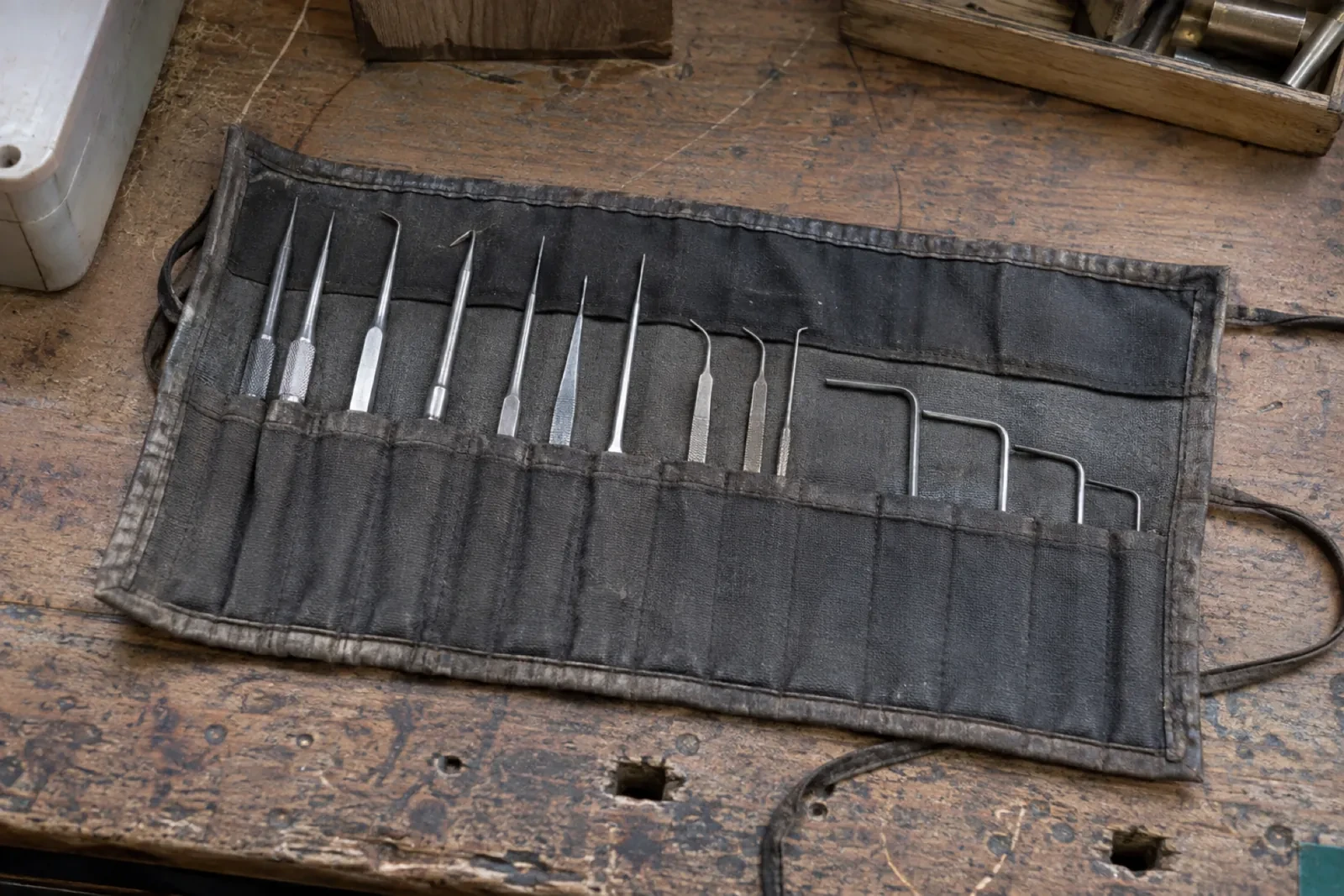
In the van
Wiring harness door boot
Key blanks cut to code
Dry lock lubricant
Linkage rods and clips
Replacement lock cylinder
Vehicle Lock Repair
What affects the quote
Corrosion from weather and road salt
A cylinder or actuator that has taken on winter brine or years of moisture through worn weatherstripping often needs more cleaning, drying or part replacement than one that has stayed dry, and the quote reflects that condition.
Any upgrade chosen during the visit
Some owners use the visit to add a spare fob, bring a household's vehicles onto matching keys, or fit a replacement key with features the original lacked. None of this is required to complete the repair; each option is priced on its own.
Whether the vehicle is easy to work around
A vehicle parked in an open, level spot is simpler to work on than one that is not easily reached or is parked somewhere awkward, which affects the time the visit takes.
What to have ready
- Do all the other doors and the trunk lock and unlock normally?
- Would you like a spare key or fob cut during the same visit?
- Is there any sign of water or corrosion around the affected lock?
Vehicle Lock Repair: questions
QuestionsIs it normal for only the trunk or hatch lock to fail while the doors are fine?
Yes, this happens fairly often because a trunk or hatch lock gets used far less than the door locks and can seize from disuse, dust or corrosion, or spin freely if its own linkage has come loose over time.
What is the difference between an actuator problem and a wiring problem?
An actuator problem usually means the small motor that moves the lock has worn out, though a switch or control signal in the same assembly can fail too. A wiring problem usually means the motor is fine but current is not reaching it, often traced to a cracked wiring boot at the door hinge or a corroded connector, though the locksmith checks the whole path rather than assuming which it is.
My key turns but the door will not open. What does that usually mean?
A key that spins without effect points to the connection behind the cylinder rather than the cylinder itself: the linkage rod that carries the turning motion to the latch has likely slipped off its clip or broken. Reconnecting or replacing that rod typically restores normal operation.
Related services
- Car Key ReplacementThe key snapped at the head while you were turning it in a stiff, frosty door lock.
- Spare Car Key DuplicationThe paperwork for the used car changed hands last week, and the previous owner mentioned, almost as an afterthought, that a second key never turned up.
- Key Fob ProgrammingA replacement fob just arrived in its box, shiny and untouched.