Car keys · Ionview
Vehicle Lock Repair in Ionview
You line the key up with the trunk lock, turn it, and feel nothing catch.
In plain words
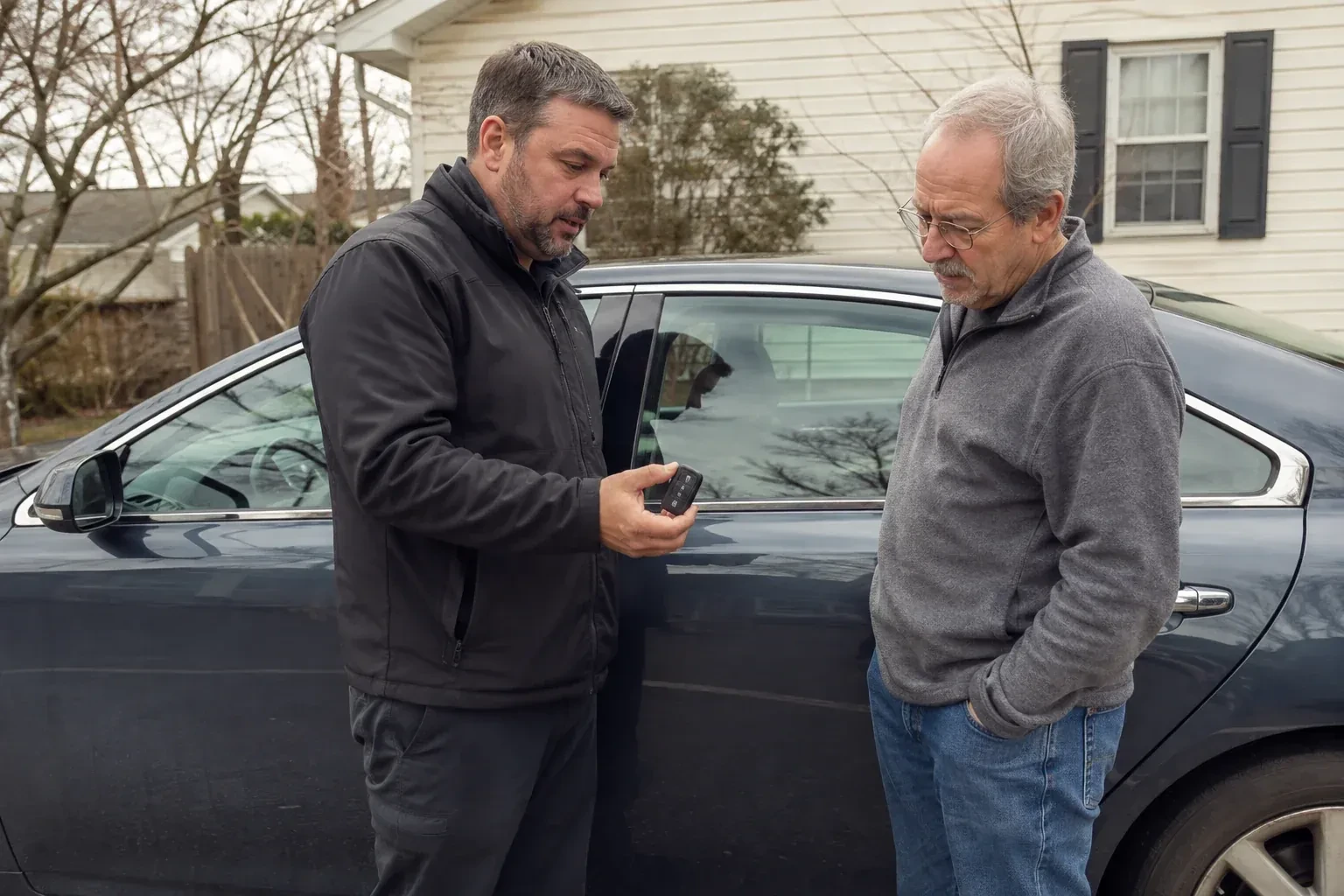
Some vehicle lock faults are entirely mechanical, a cylinder worn from years of use, a linkage rod that slipped off its clip, while others sit in the electrical side: a tired actuator motor, a corroded connector, or a coin battery inside the key fob that has finally run flat. A locksmith working on a modern vehicle checks both sides before deciding what to repair, since a stiff key points first to the key, the cylinder and the mechanical path, while trouble that shows up only with the switch or remote points the other way, and the two call for different parts entirely.
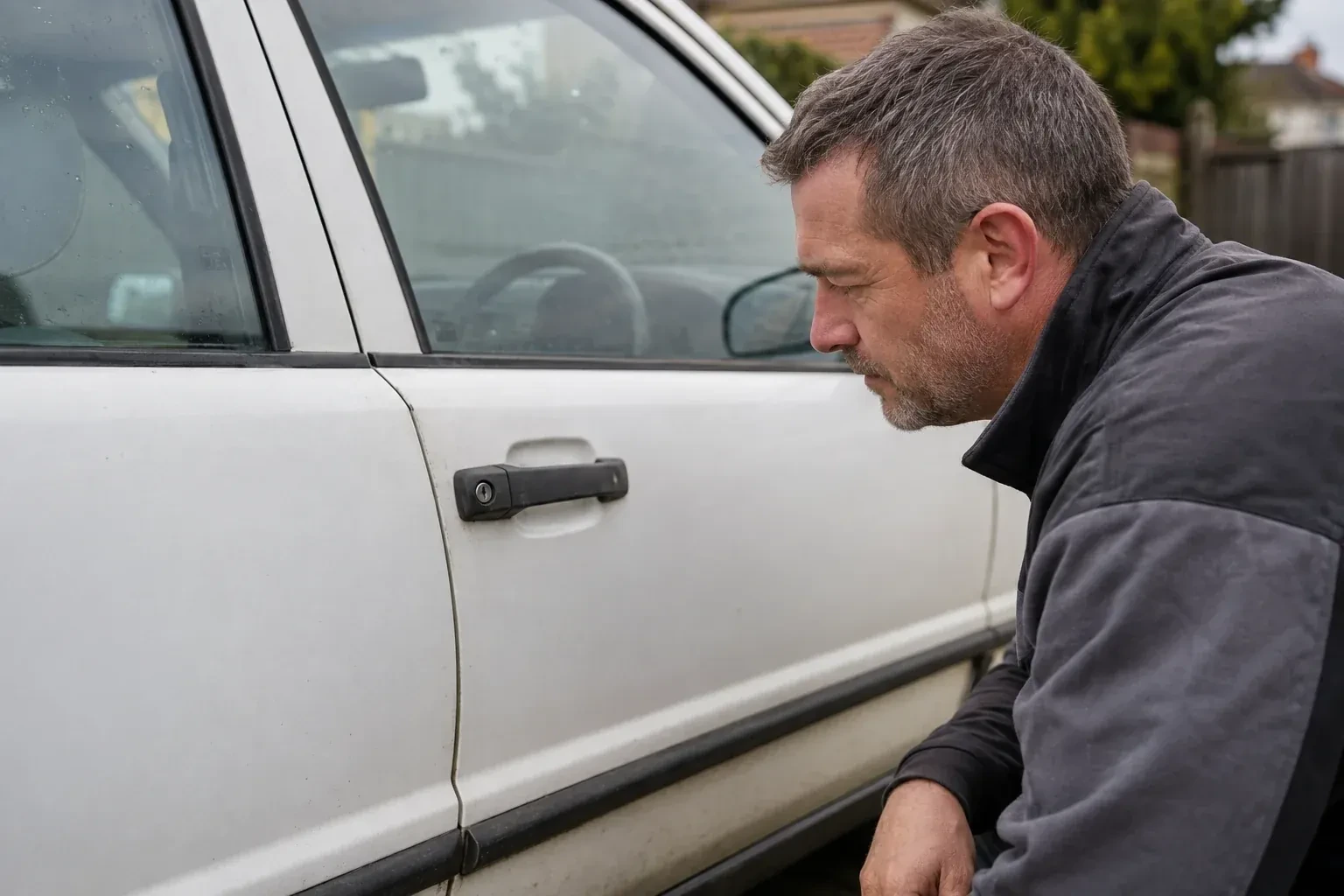
How the visit goesYou line the key up with the trunk lock, turn it, and feel nothing catch. It spins freely, over and over, never lifting the latch, while every other lock on the car still locks and unlocks the way it always has.
Vehicle Lock Repair
How the visit goes
Checking the seal and the door's overall fit
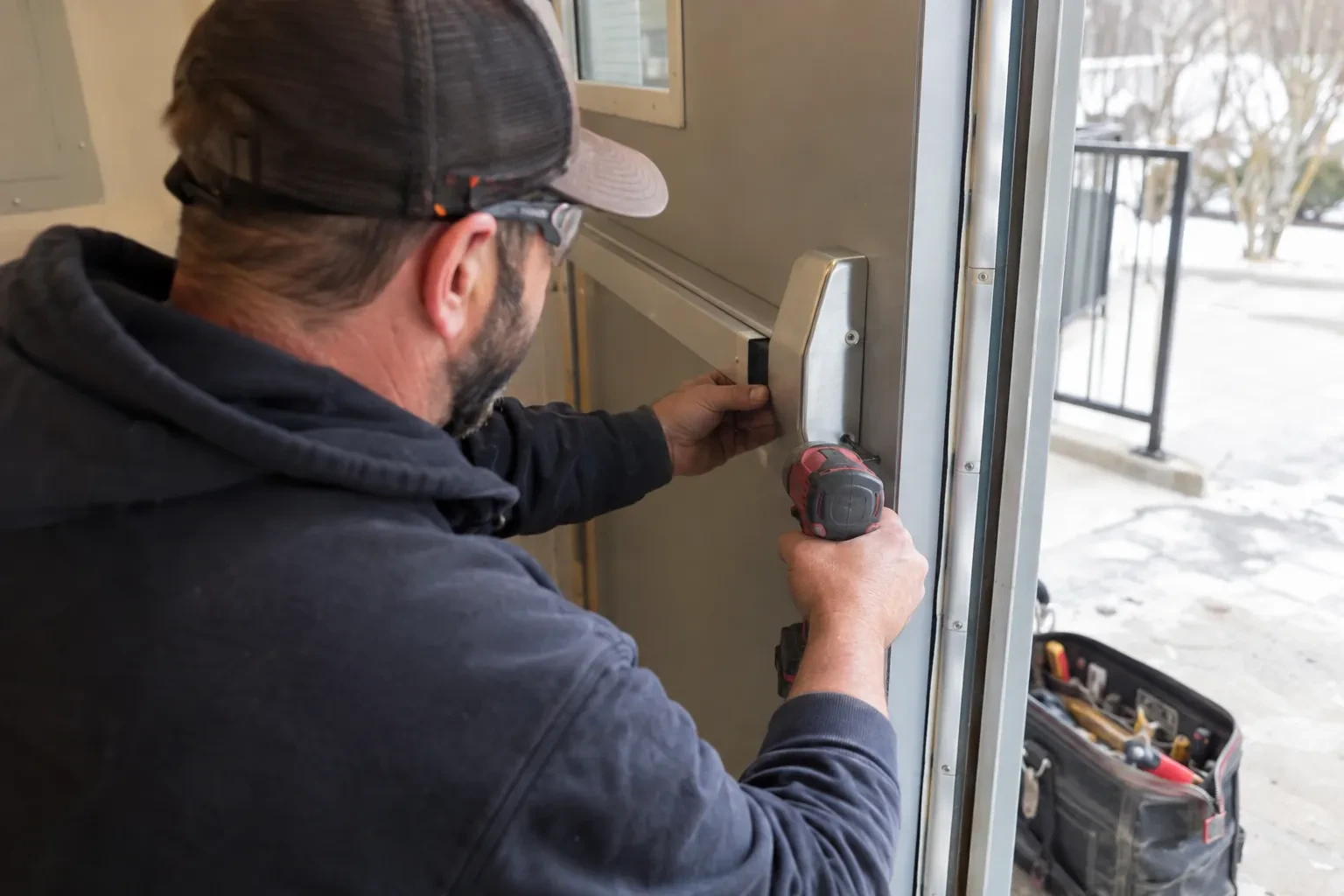
Weatherstripping around the affected opening gets a look before the panel goes back on, because a perished or torn seal is often how moisture reached the parts that just failed. The locksmith also checks how the door or hatch sits in its frame, since a panel that has sagged slightly can put pressure on the latch and mimic a lock problem that is really a fit problem.
Freeing or replacing a worn cylinder
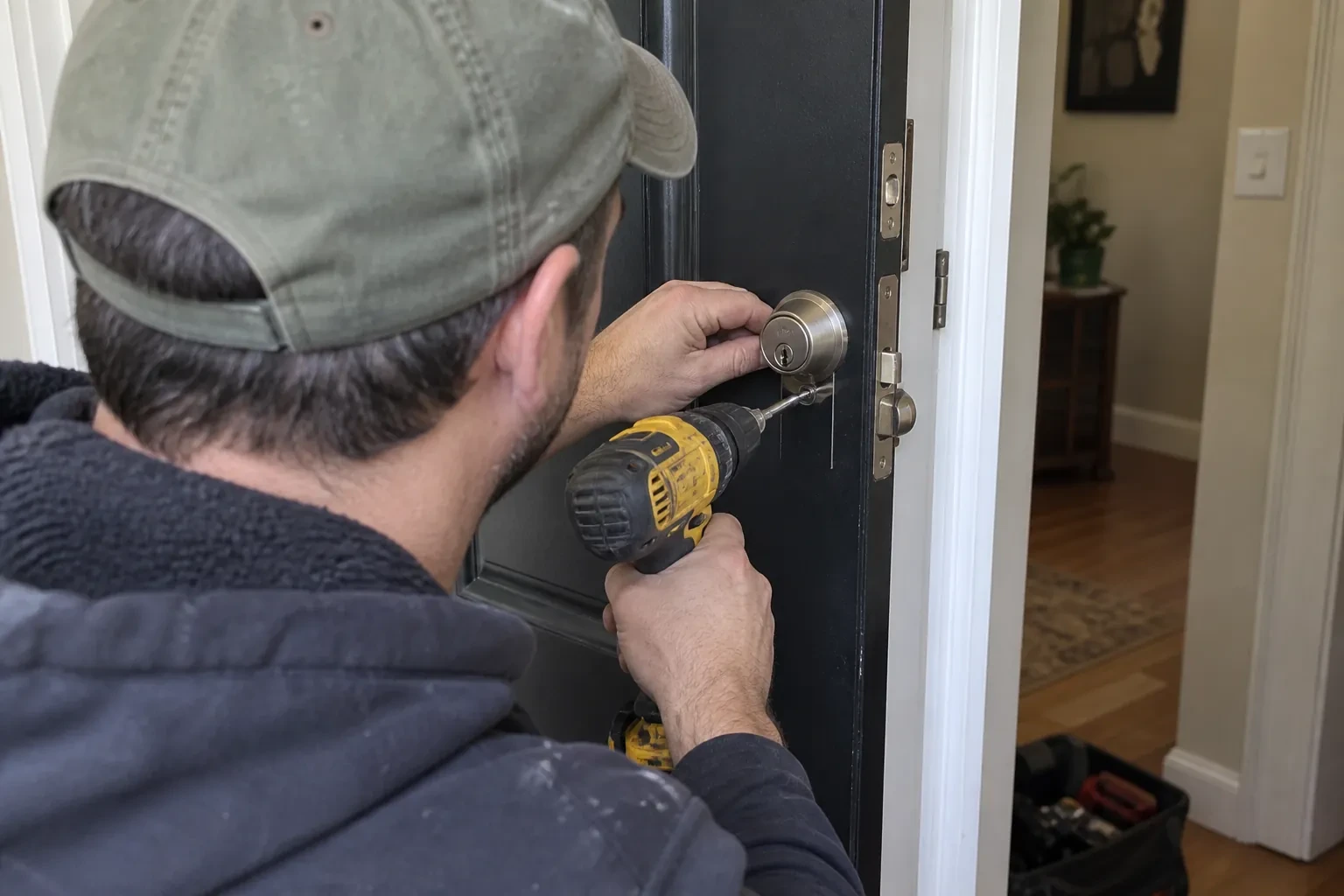
When the cylinder itself is the problem, worn from years of the same key or from corrosion inside the pins, the locksmith removes it from the door or trunk and either services the internals or fits a matched replacement. A replacement cylinder is chosen to fit the vehicle's existing key or fob system, so the rest of the vehicle's locks continue to answer to the same key once the new part is in.
A central locking set that behaves as one
With the failed link repaired, the central locking system should now behave the way the vehicle is designed to: every door meant to move together does so on a single press of the fob or turn of the key, and any door, trunk or tailgate meant to unlock separately still does. Testing this from a short distance away, the way you normally approach the vehicle, confirms the fix holds under real use rather than only when standing right at the door.
Vehicle Lock Repair
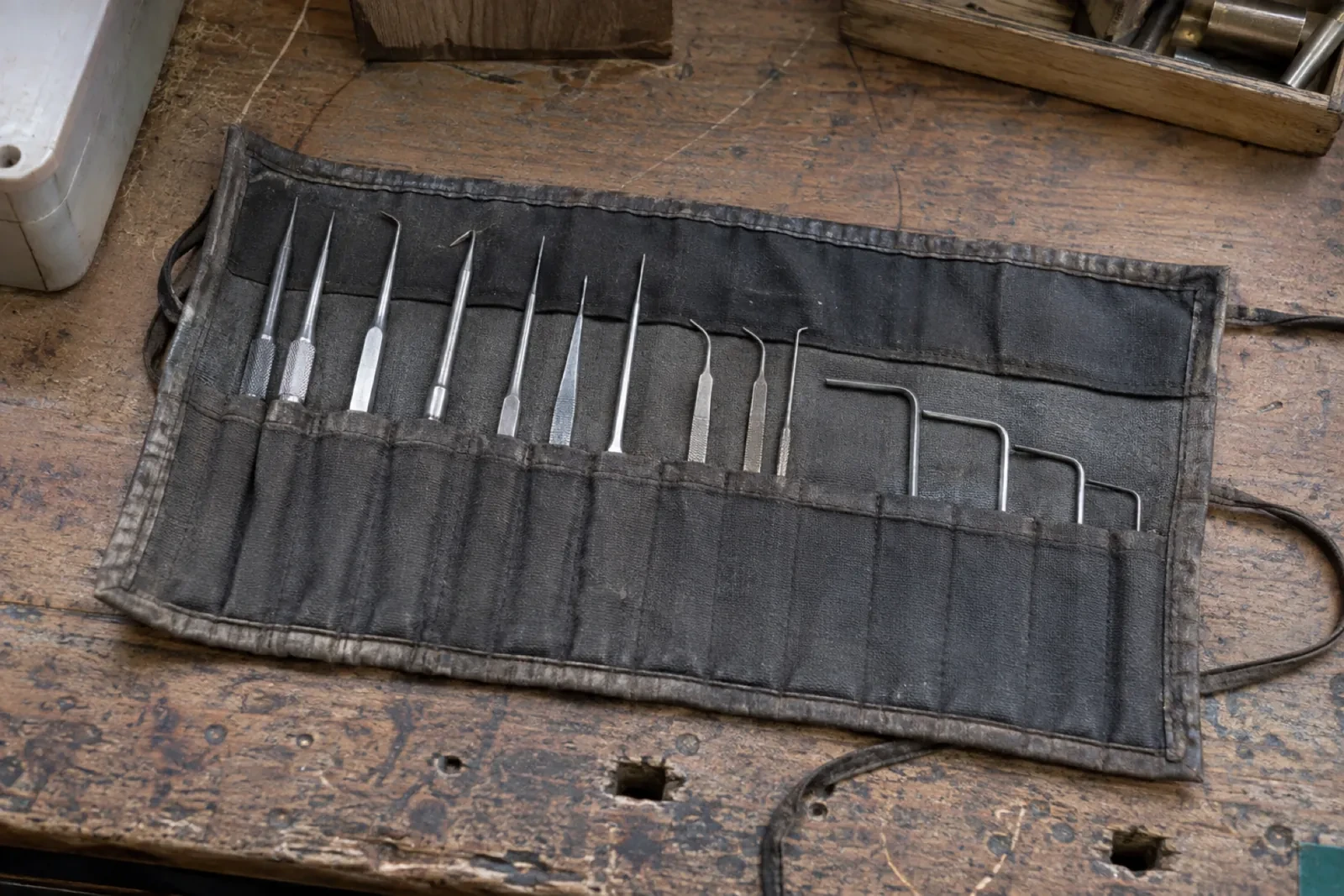
In the van
Wiring harness door boot
Key blanks cut to code
Dry lock lubricant
Linkage rods and clips
Replacement lock cylinder
Vehicle Lock Repair
What affects the quote
Central locking versus a single door
A fault confined to one lock is more contained than one that involves the vehicle's central locking module or wiring shared across several doors, which takes longer to trace and quotes accordingly.
Transponder or immobilizer compatibility
Vehicles that require a chip inside the key for the engine to start add the cost of a compatible transponder and the programming step, on top of cutting the key blade itself.
Mechanical or electronic fault
A worn cylinder or a slipped linkage rod is generally simpler work than a failed power actuator or a wiring fault reaching back to the hinge, and the quote reflects which side of the lock has failed.
What to have ready
- Is there a spare key or fob you could compare against the affected one?
- Has the key fob's battery been replaced recently, or not that you recall?
- Would you like a spare key or fob cut during the same visit?
Vehicle Lock Repair: questions
QuestionsIs it normal for only the trunk or hatch lock to fail while the doors are fine?
Yes, this happens fairly often because a trunk or hatch lock gets used far less than the door locks and can seize from disuse, dust or corrosion, or spin freely if its own linkage has come loose over time.
What is the difference between an actuator problem and a wiring problem?
An actuator problem usually means the small motor that moves the lock has worn out, though a switch or control signal in the same assembly can fail too. A wiring problem usually means the motor is fine but current is not reaching it, often traced to a cracked wiring boot at the door hinge or a corroded connector, though the locksmith checks the whole path rather than assuming which it is.
My key turns but the door will not open. What does that usually mean?
A key that spins without effect points to the connection behind the cylinder rather than the cylinder itself: the linkage rod that carries the turning motion to the latch has likely slipped off its clip or broken. Reconnecting or replacing that rod typically restores normal operation.
Related services
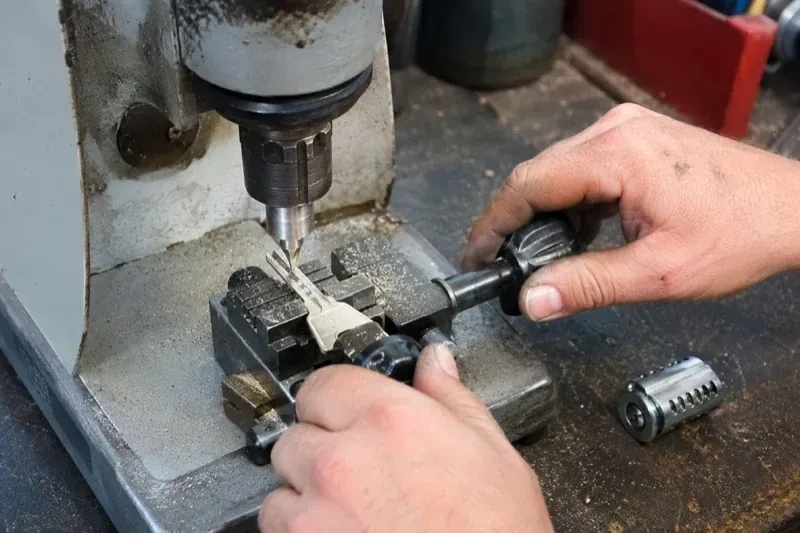
- Car Key ReplacementThe key snapped at the head while you were turning it in a stiff, frosty door lock.
- Spare Car Key DuplicationThe paperwork for the used car changed hands last week, and the previous owner mentioned, almost as an afterthought, that a second key never turned up.
- Key Fob ProgrammingA replacement fob just arrived in its box, shiny and untouched.