Car keys · Wexford Heights
Transponder Key Programming in Wexford Heights
Every key that ever opened the car is gone at once, one taken with a stolen bag, the spare misplaced months ago and never replaced.
In plain words
Transponder-based immobilizers became mandatory equipment on new vehicles sold across the country from September 2007 onward, though many manufacturers had already been fitting them for years before that date. Practically, this means most vehicles on the road today, whatever their age, already expect a key that carries a chip rather than a plain metal blade. A locksmith working on an older, pre-transponder vehicle follows a noticeably different process than one working on a car built after that standard became routine.
How the visit goesThe car came with a single key when the sale went through, and that key is the only thing standing between the household and being stranded. A second one has been on the list for weeks, quietly moved down every time something more urgent came up.
Transponder Key Programming
How the visit goes
Whether the lock and the immobilizer agree
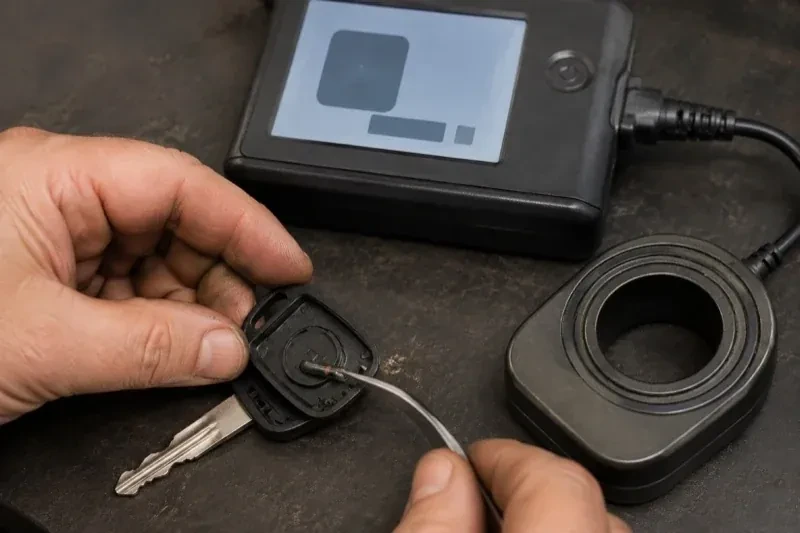
A key has two jobs: turning the mechanical lock and satisfying the electronic immobilizer, and the two are checked separately before any programming starts. A blade can be cut perfectly and still fail the second test if the wrong chip family ends up in its head. Confirming both together, rather than assuming a good mechanical fit means the electronics will follow, is what keeps a finished key from turning the lock politely while leaving the engine exactly as unresponsive as it was.
Reading the vehicle before writing anything to it
A diagnostic tool connects to the vehicle before any new information goes into it, and the current key list is read first so nothing already stored is disturbed by accident. This step also confirms the exact immobilizer and chip generation in front of the locksmith, since guessing wrong at this stage wastes an attempt on a system that will simply reject it. Only once the vehicle's own data is understood does the visit move toward adding, clearing, or replacing an entry in that list.
The old key becomes just a piece of metal
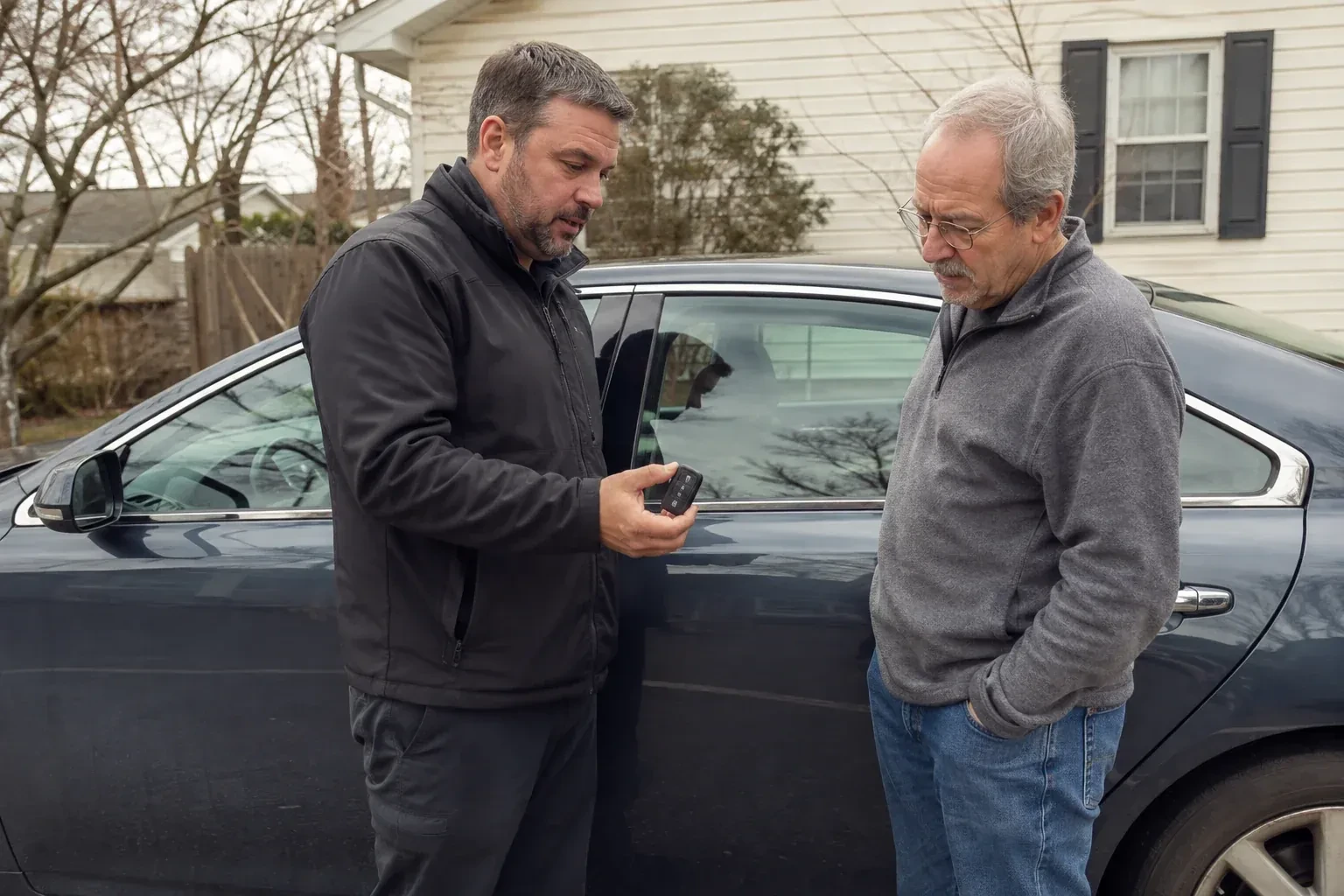
If a key was lost or stolen, whoever is holding it now has an object that still fits the lock but no longer means anything to the immobilizer. It will turn the mechanical side of the door if it ever gets that far, but it cannot authorize the engine, which is the part that matters. That distinction is worth explaining plainly, since a missing key can otherwise sit at the back of someone's mind indefinitely, unresolved, when the vehicle's own memory has already moved on without it.
Transponder Key Programming
In the van
Emergency insert blade
Fob battery
VIN reference tool
Frequency test reader
Proximity smart key
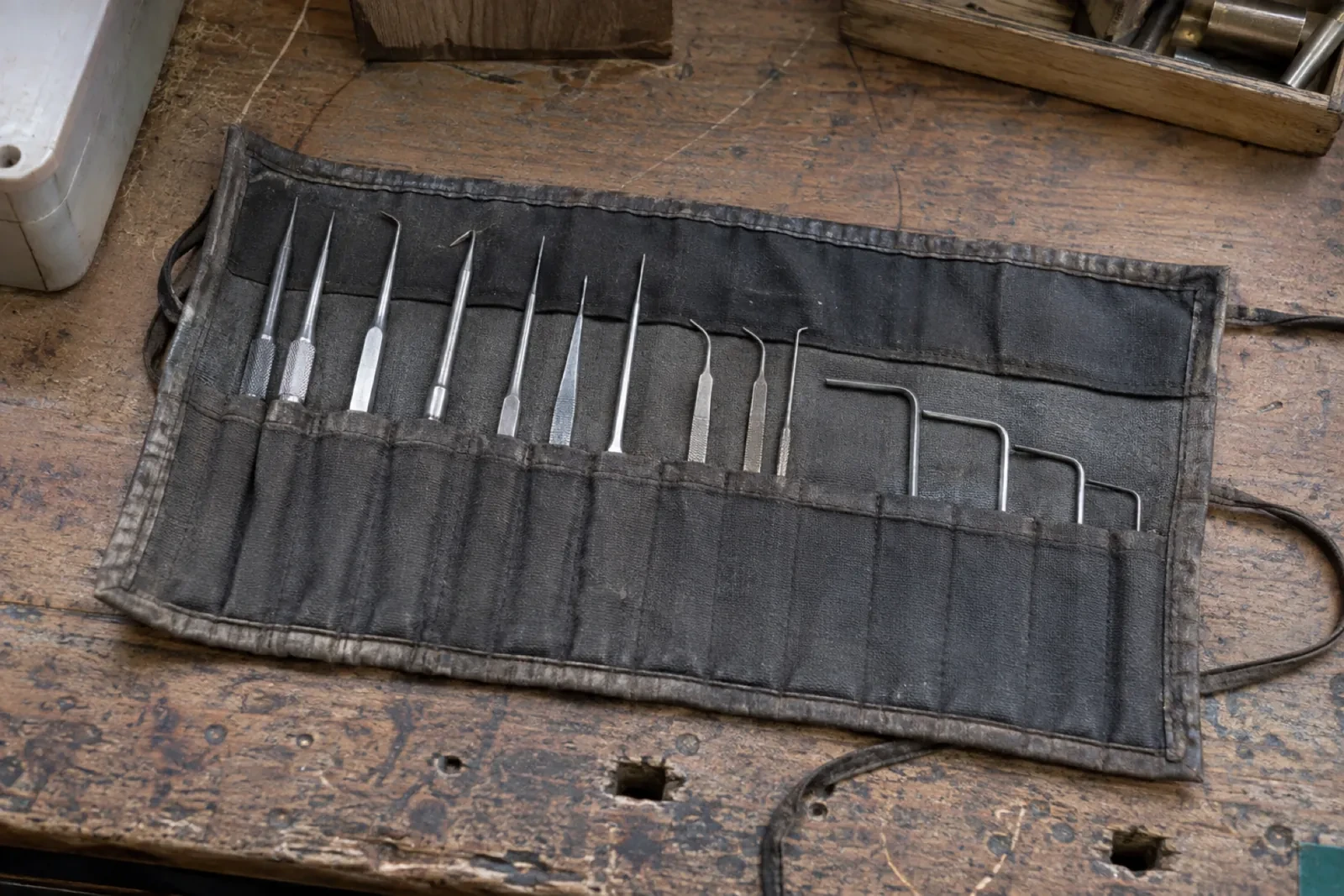
Transponder Key Programming
What affects the quote
Whether any working key remains
Adding a spare or a driver's key with an existing key on hand is a more contained job than an all-keys-lost situation, which needs its own extended process to re-establish trust with the vehicle before anything new can be written.
Manufacturer-gated security access some newer vehicles require
A number of newer vehicles require an additional secure session with the manufacturer's own network before a key can be added, which is a real step in the process on those models rather than an optional add-on.
Trim or dash removal some models need for access
A small number of vehicles place the antenna ring or module somewhere that needs a panel or trim piece moved for a clear connection, which adds a step beyond the programming itself on those specific models.
What to have ready
- Is the dashboard security light flashing or staying lit?
- Is this a lost, stolen, damaged or spare-key situation?
- How many working keys would you like when this is finished?
Transponder Key Programming: questions
QuestionsCan a push-button, proximity-style key be programmed the same way?
Yes, though there is usually more to pair afterward: the proximity functions that let the vehicle detect the key nearby, alongside the same immobilizer identity a traditional transponder key would carry. The visit still ends with the same test, confirming the engine starts and the vehicle recognizes the key at a normal walking distance.
What's the difference between a transponder key and a key fob?
The transponder is the passive chip that talks to the immobilizer and lets the engine start; it needs no battery of its own. The fob is the separate, battery-powered piece that handles remote locking, unlocking and alarm functions. Many modern keys combine both in one housing, but they answer two different systems, which is why a fob with a dead battery can still start the car with its mechanical blade.
What does a flashing security light on the dashboard usually mean?
Most commonly it means the immobilizer does not recognize the key currently in the ignition, whether because the chip has failed, the key was never programmed, or the vehicle's module is looking for a different identity than the one it is being shown. It is a useful, specific signal rather than a general warning, and it points fairly directly at a transponder issue.
Related services
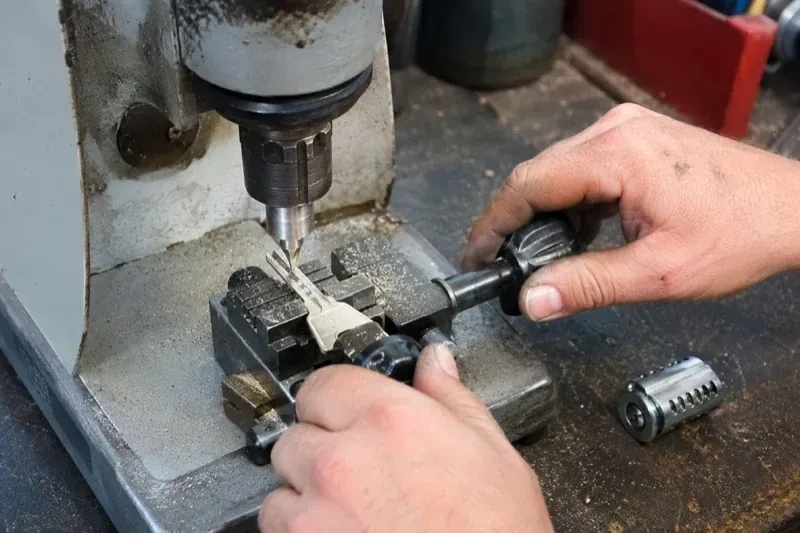
- Car Key ReplacementThe key snapped at the head while you were turning it in a stiff, frosty door lock.
- Spare Car Key DuplicationThe paperwork for the used car changed hands last week, and the previous owner mentioned, almost as an afterthought, that a second key never turned up.
- Key Fob ProgrammingA replacement fob just arrived in its box, shiny and untouched.