Lockouts · Wexford Heights
Home Lockout Service in Wexford Heights
After a week of humid weather the back door has swollen in its frame.
In plain words
The visit follows a steady order. On the phone you describe the door, the lock and where the key went, which tells the locksmith what to bring. At the house, identification and address are checked and the lock is examined, including the door's fit in its frame. The opening itself comes next, using the least invasive technique that suits the hardware. Once inside, the lock is cycled several times to confirm it works, and you are told what was done. Any recommendation, such as rekeying because a key is missing, is explained then and carried out only if you want it.
How the visit goesThe key slides in and turns all the way round, but the bolt stays put. There is no click, no resistance, just a key spinning in a lock that has stopped listening to it after years of daily use.
Home Lockout Service
How the visit goes
Where the key went
The next question is about the key rather than the lock. A key left on the hall table means the lock is healthy and only the door needs opening. A key lost on a bus, dropped in a parking lot or taken with a stolen bag means a stranger could be holding it, which changes the advice given after entry. A key that turns without moving anything points to wear inside the cylinder or a broken tailpiece, and a key that snapped calls for extraction before anything else. Ten seconds of honest history about the key saves guesswork and shapes the whole visit.
Opening, then closing the loop on a lost key
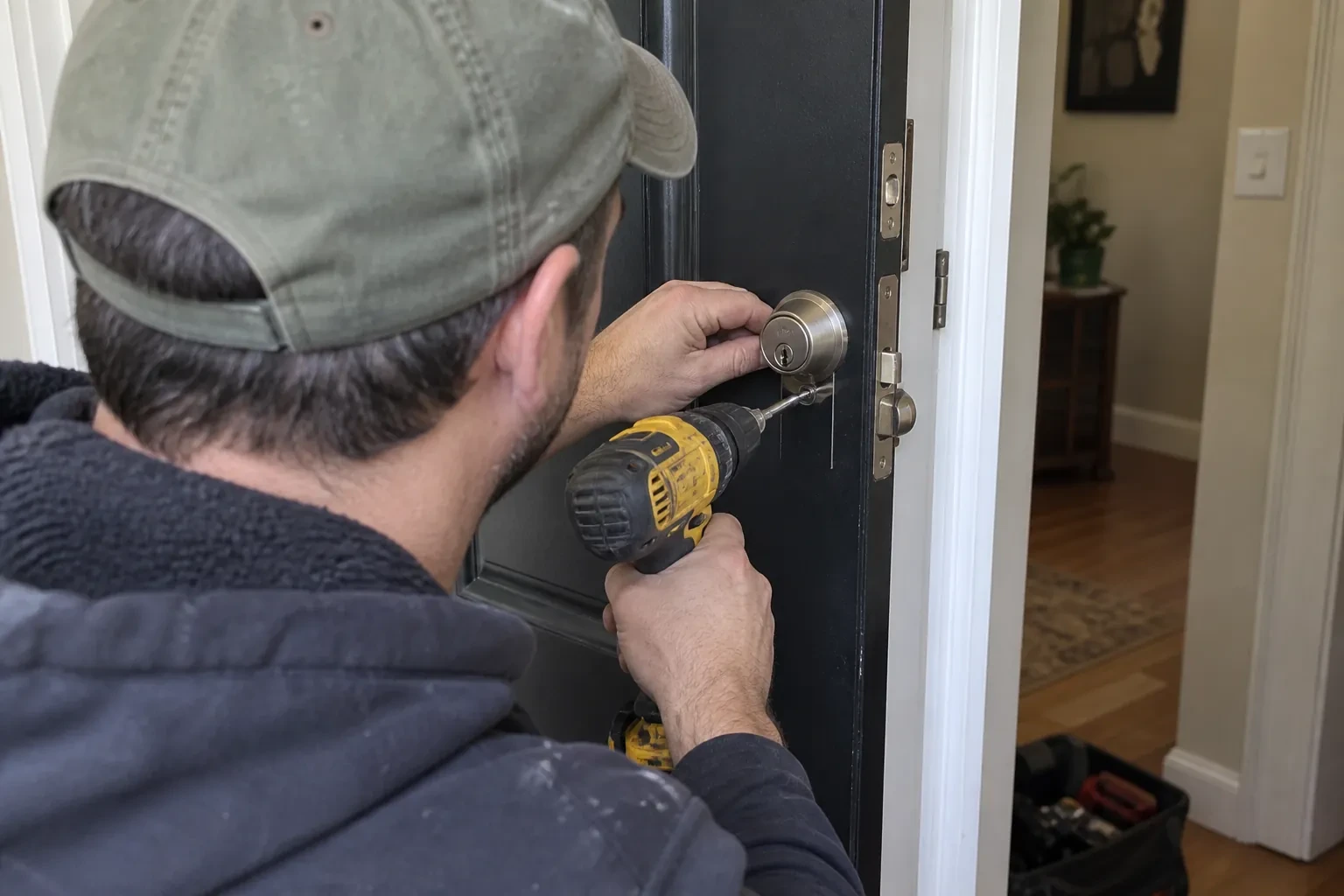
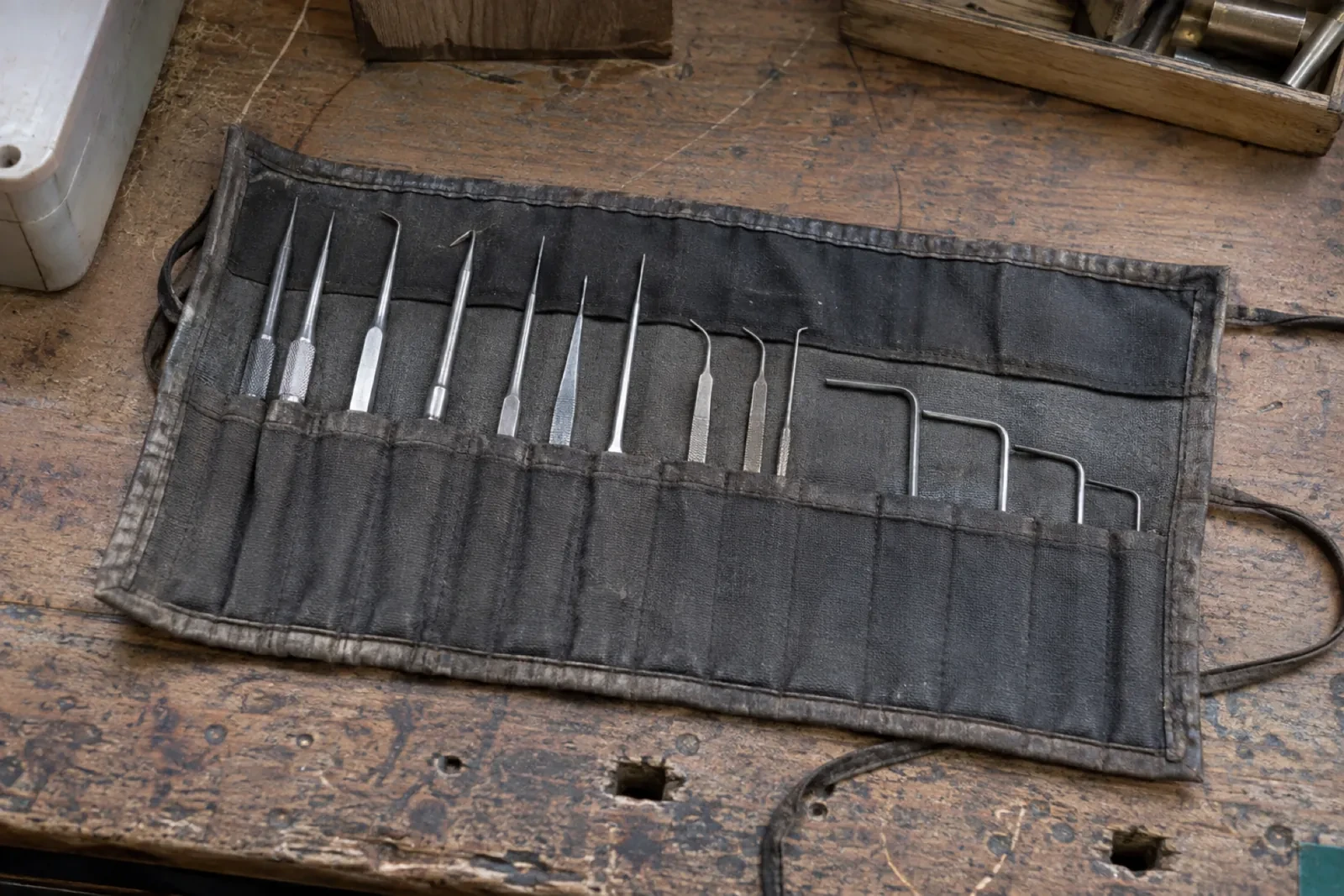
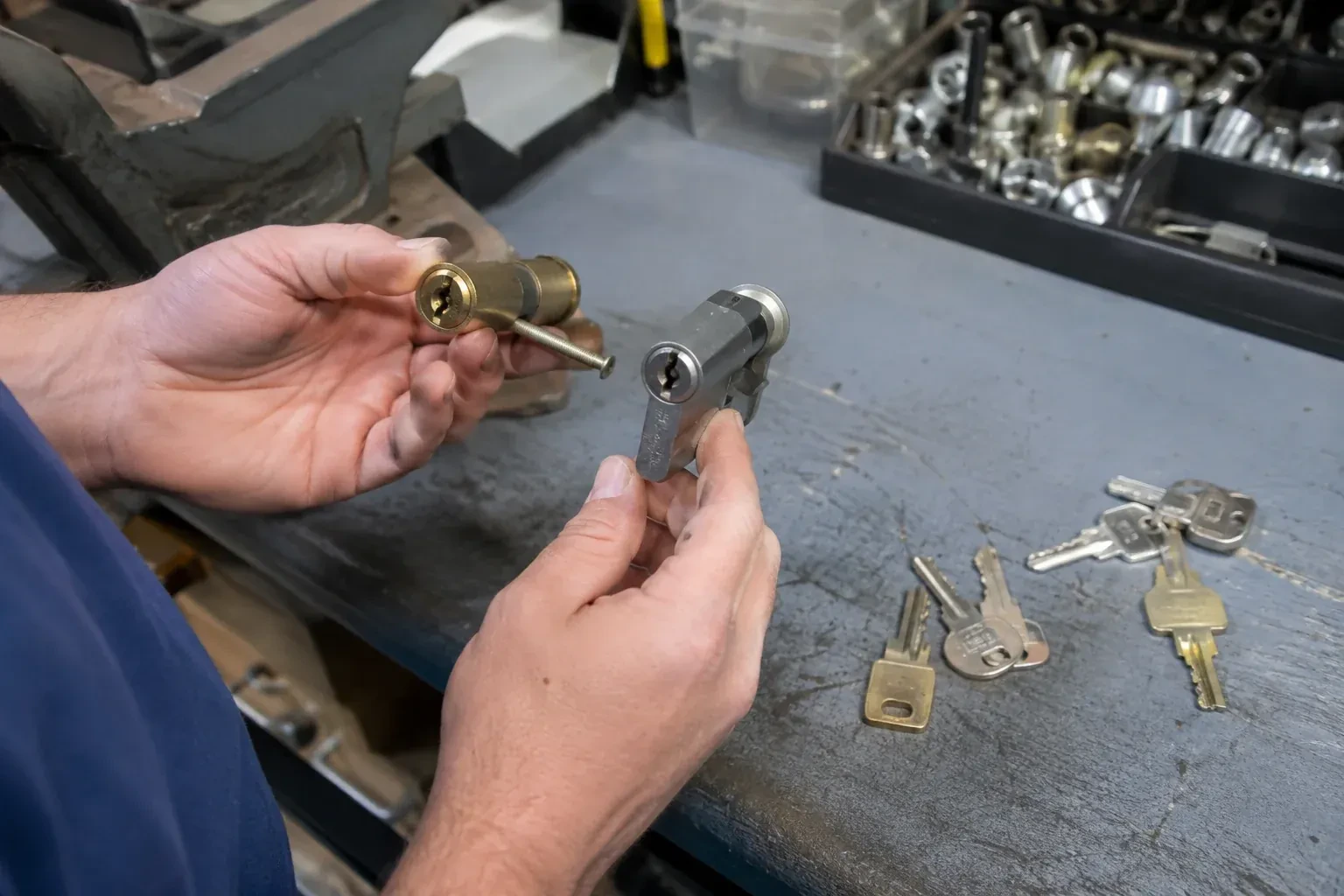
When the key is genuinely gone, the work has two halves. The first is the opening, done the usual way with picks, a decoder or a bypass. The second is making the missing key useless. The locksmith removes the cylinder, uses a plug follower to slide the plug out without spilling the springs, replaces the bottom pins to a new combination, and reassembles it so a freshly cut key operates it and the old one does not. Each exterior lock that shared the old key is treated the same so the house stays on one key. New keys are cut from the new pinning, tested in every door, and counted into your hand.
A door and frame that line up again
When the lockout traced back to a door that had sagged or swollen, you get more than an open door: the reason is dealt with. Hinge screws that had worked loose are tightened or replaced with longer ones that bite into the framing, the strike plate is adjusted or its pocket deepened so the bolt has room to throw fully, and any weatherstrip that was pushing the door out of square is trimmed. Afterwards the bolt should slide with a fingertip on the thumb-turn and no shoulder on the door. Check it again at the turn of each season, since wood keeps moving with the humidity, and a two-minute screw check saves a return visit.
Home Lockout Service
In the van
Plug follower and repinning kit
Key blanks and key cutter
Replacement cylinder or deadbolt
Nine-volt battery for smart locks
Plug spinner
Home Lockout Service
What affects the quote
Door and frame adjustment
When the lockout was really a swollen or sagging door, fixing the cause means work on hinges, strike plate or weatherstrip. That adjustment is quoted as its own item alongside the opening.
Type and grade of the lock
A builder-grade knob latch, a residential deadbolt, a mortise case in an older home and a high-security cylinder each take different tools and different amounts of time to open, and that difference shows in the quote.
Damage from earlier attempts
A latch bent by a credit card or a cylinder scarred by a screwdriver may need repair or replacement in addition to the opening. The locksmith points out what was already there before quoting that part.
What to have ready
- Is the lock a keypad or smart lock, and does it have any power left?
- If the key is lost, would you like the locks rekeyed during the same visit?
- Which door are you locked out of, and what kind of lock is on it?
Home Lockout Service: questions
QuestionsWhat if the door is stuck rather than the lock?
This is more common than people expect, especially in older houses and at the change of seasons. A door that has swollen, sagged on its hinges or been pushed out of square by thick weatherstripping can pin the bolt against the strike so it will not draw back even with the right key. The locksmith relieves the pressure to free the bolt, then adjusts the strike, hinges or seal so the door closes and locks without a shoulder.
Will opening the door damage my lock?
In most residential lockouts the lock is untouched. Picking, decoding and latch tools operate the mechanism the same way your key does, so there is nothing to repair afterwards. A drill only appears when a cylinder is seized, plugged by a snapped key or engineered against picking, and you hear about that before it starts. Should it come to that, replacement hardware goes on before the locksmith leaves so you lock up normally that evening.
Can you get me in if my smart lock has died?
Yes, usually. Backup access on a keypad or app-controlled deadbolt depends on the model. Many carry small external terminals that wake the lock when a fresh nine-volt battery is touched to them, long enough to enter your code; some also keep a conventional keyed override behind a cover, which a locksmith can pick or decode like any other cylinder, while other current models have no cylinder at all and rely only on their own recovery method. Once inside, the batteries are replaced and your codes are checked.
Related services
- Broken Key ExtractionThe key went in like any other morning, you turned it, and something gave with a small metallic click.
- Break-In Damage Lock RepairSomeone smashed the little window beside the door, reached in and turned the thumb-turn.
- Seized & Jammed Lock OpeningThe lock works, but only if you lean on the door with your hip while turning the key.