Change or rekey · Wexford Heights
Vintage Mortise Lock Service in Wexford Heights
The interior bedroom doors on the second floor have the original mortise latches, and none of them close any more.
In plain words
Interior doors are as much a part of this work as the entry. Bedroom, bathroom and closet doors in an older home usually carry a lighter mortise latch with a privacy turn button, and after decades without lubrication they stop catching or the turn button seizes. These small cases are short jobs on the bench: a clean, a spring, a new turn button spindle where the old one has sheared. Sets of interior locks are often serviced in one visit, and a bit key can be cut that operates all of them, which is how they were originally supplied when the house was built.
How the visit goesThe key turns freely in the round cylinder on the door, all the way around and back, without the bolt shifting at all. The cylinder itself wobbles slightly when you press it, as if it has come loose inside the door.
Vintage Mortise Lock Service
How the visit goes
How the knob and key actually behave
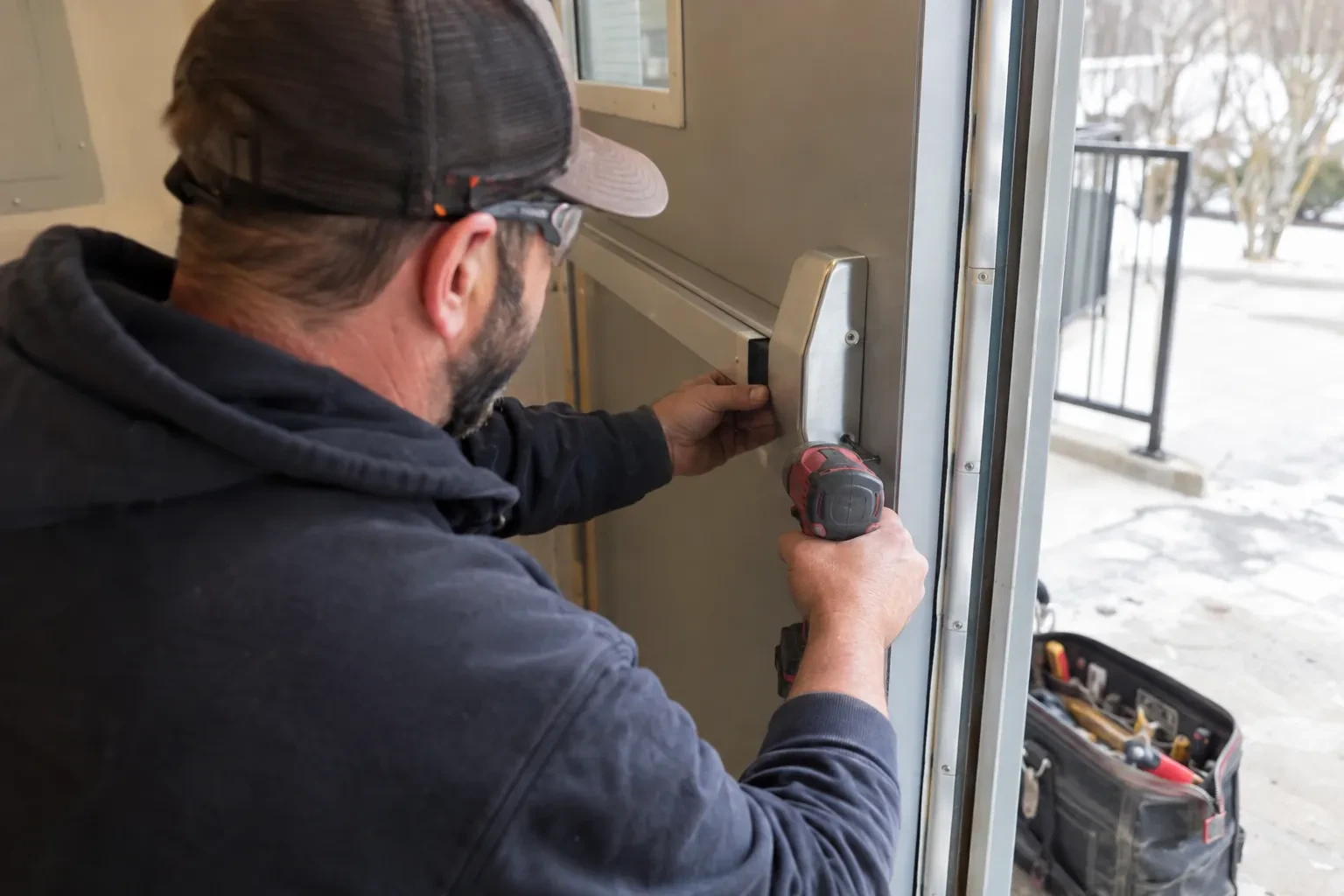
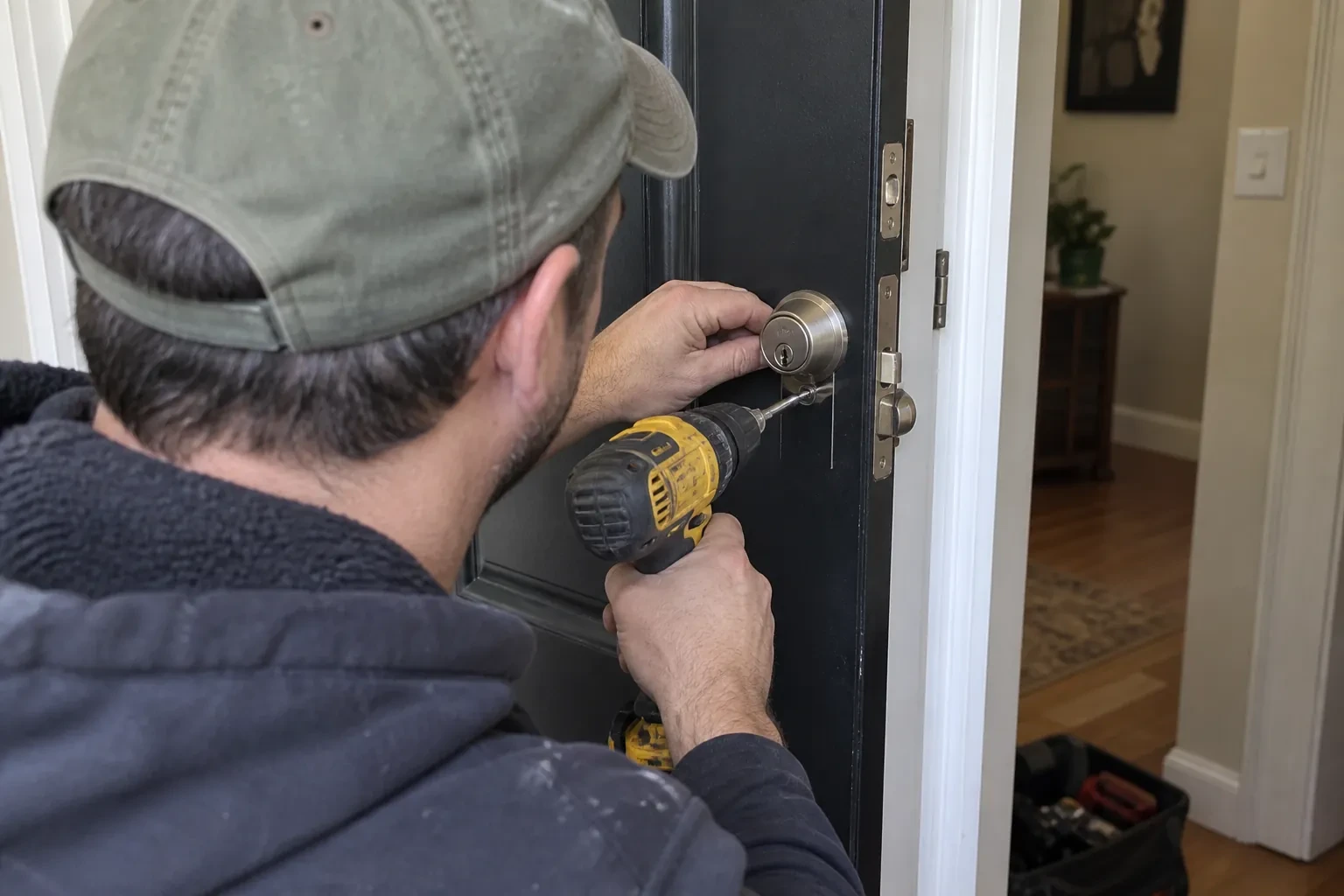
A short conversation with the hardware comes next. The knob is turned and released: does it return smartly, sag back, or not return at all? Is there free play before the latch moves? The key is tried in the deadbolt with the door open: does the bolt throw fully, catch part way, or ignore the key while the key turns? The thumb-turn gets the same test. Each answer points somewhere different inside the case, a latch spring, a hub spring, a worn hub square, a deadbolt lever, a cylinder cam, and the locksmith is building a short list of likely parts before the cover ever comes off.
Taking the lock out without marking the door
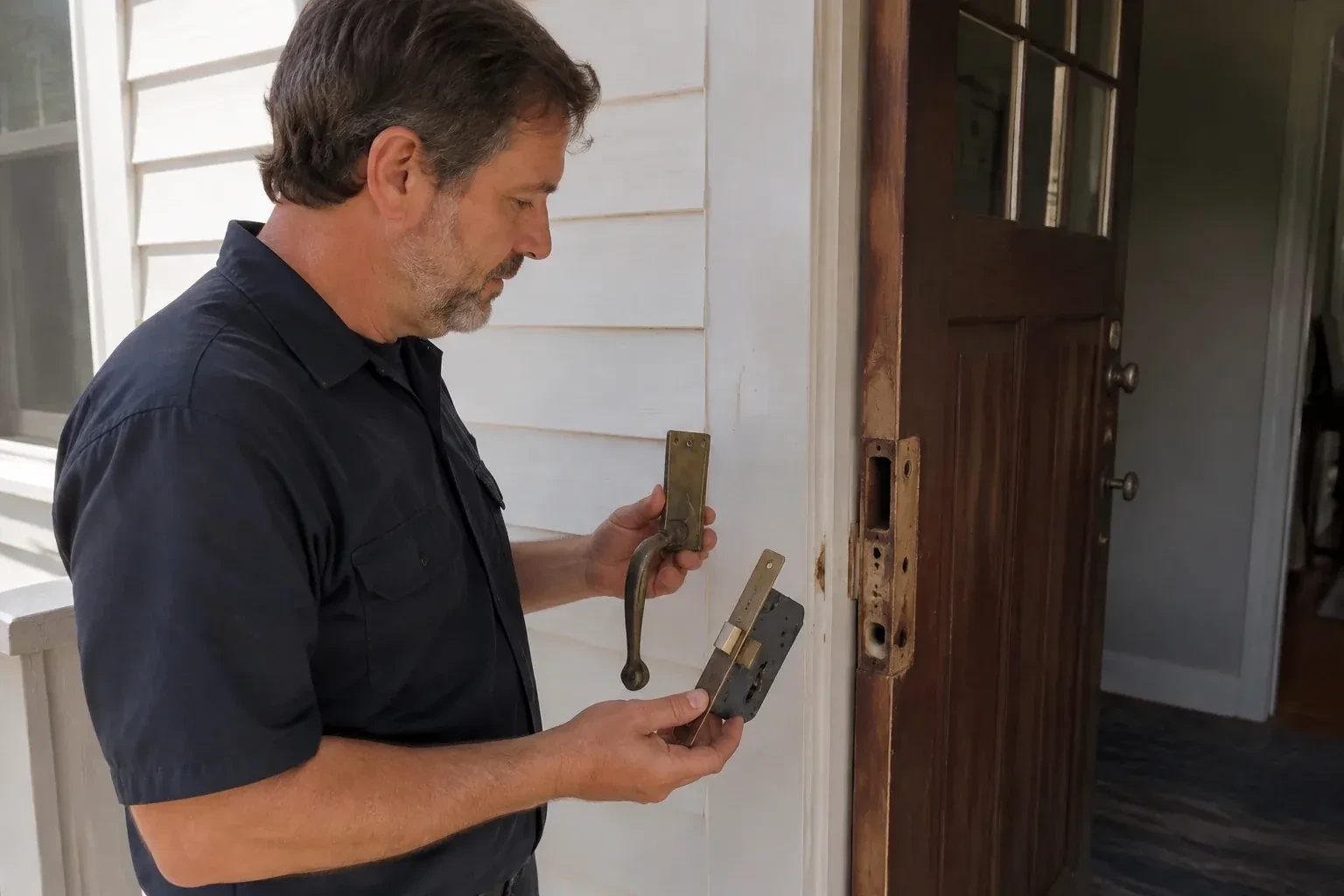
Removal is done in a set order so nothing is forced. The knob set screws are backed off and the knobs and spindle drawn out, then the escutcheons are lifted away, their screw positions photographed for reassembly. On a cylinder lock, the small set screw in the faceplate is released and the cylinder is unthreaded from the case. The faceplate screws come out, and the case is eased from its pocket with a gentle rock, never a pry bar, because the wood at the edge of an old door is thin. Everything that comes off is bagged and labelled, and the pocket is looked at while it is empty.
Looking after the finish
The brass or bronze knobs and escutcheons on an old door have earned their patina, left alone unless you ask otherwise. Paint cleaned from a faceplate or strike leaves the bare metal as found, not polished bright. If you would rather see them shine, check the finish first: unlacquered brass takes a gentle polish well, kept off the keyhole and spindle; polishing a lacquered piece can scratch through it and start tarnish underneath. Lacquered reproduction parts resist tarnishing rather than darken to match; an unlacquered reproduction is built to age and blend in over a season or two. A light wipe when dusting is all the upkeep the trim needs; wet cleaners find their way into the case.
Vintage Mortise Lock Service
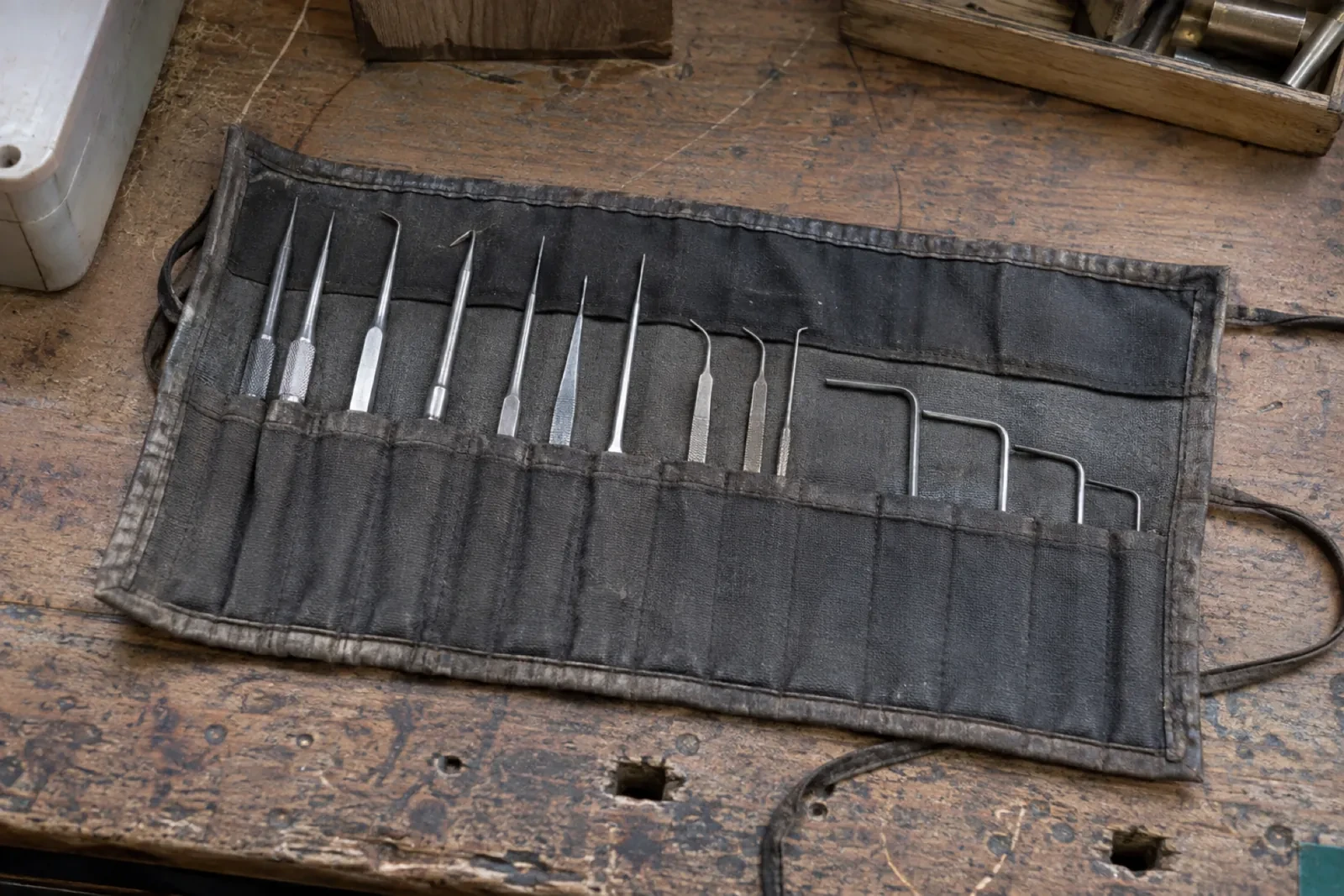
In the van
Latch and hub springs
Hardwood dowel and wood glue
Spindle and knob set screws
Bit key blanks
Reproduction mortise case
Vintage Mortise Lock Service
What affects the quote
Travel and access
Distance to the property and how easy it is to work at the door, on a busy entry or a third-floor walk-up, are part of any call-out and are stated when the visit is booked.
Extras you choose on the day
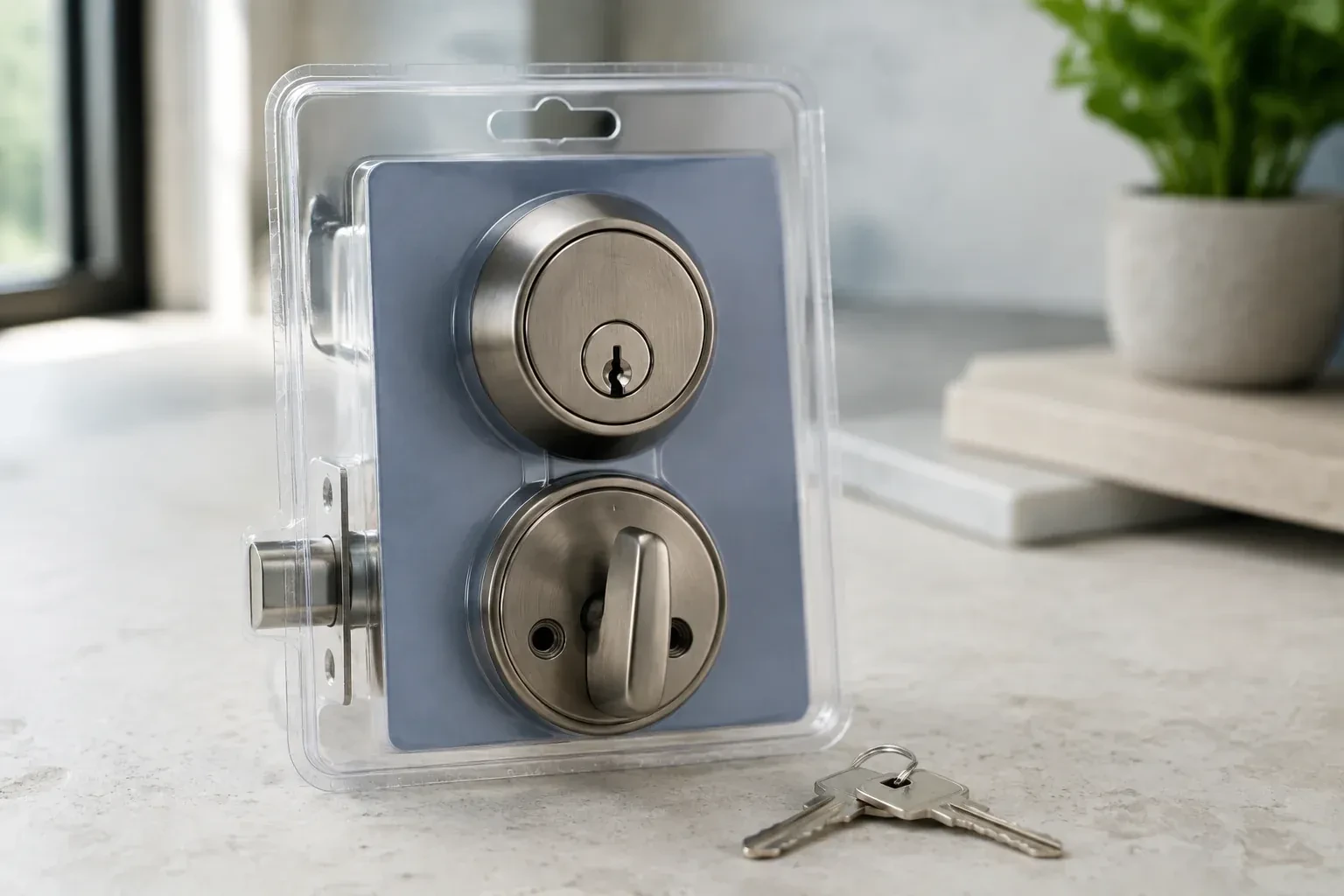
A high-security cylinder, a lockbox for a spare bit key or a separate modern deadbolt above the original are optional additions. None is required to make the old lock work, and each is priced as its own line.
Bit key or cylinder lock
A bit-key case has keys filed by hand on the bench, while a cylinder lock is rekeyed or fitted with a new cylinder on a key machine. The two take different time and materials, and the quote follows.
What to have ready
- Can you send a photo of the plate in the door edge and one of the keyhole?
- How many keys would you like to have afterwards?
- Does the deadbolt throw fully with the key or the thumb-turn?
Vintage Mortise Lock Service: questions
QuestionsCan the lock be made more secure while keeping it original?
Yes, within reason. A later mortise case can take a modern high-security cylinder of the right thread and cam, chosen for its pick resistance; stopping casual key copying is a separate question, answered by fitting a restricted or patented key system alongside it. Longer screws into the strike and a properly seated deadbolt add more than most people expect. For a bit-key lock, the practical gains are a full-throw deadbolt and a good strike; if more is wanted, a separate modern deadbolt above it leaves the original lock untouched.
The key turns all the way round but the bolt stays put. What is wrong?
On a cylinder mortise lock this points to the cylinder rather than the case. The set screw that holds the cylinder in the door has loosened or stripped so the whole cylinder rotates, or the cam on the back of the cylinder has worn or is the wrong shape and no longer catches the bolt lever. Both are fixed by resetting or replacing the cylinder and its set screw, and the case itself is usually fine.
Can a modern cylinder be fitted to my old mortise lock?
Often, on cases that already take a threaded cylinder. Mortise cylinders are made in standard thread sizes and lengths with different cam shapes, and a new one is selected to match the case and the door thickness. That gives you keys cut on a machine and the option of keying the door alike with the rest of the house. A bit-key case has no cylinder to swap; its keys are made on the bench instead.
Related services
- Deadbolt InstallationThe old deadbolt has grown lazy.
- Lock Replacement & UpgradeThe house is fifteen years old and every exterior door still wears the light hardware the builder fitted: a short bolt, a thin strike held by two small screws, and a knob lock that never suited a street entrance.
- Smart Lock InstallationThere are four copies of the front-door key floating around: one with the cleaner, one with a neighbour, one on a hook at your parents' place, and one you honestly cannot account for.