High security · Toronto
Safe Installation & Servicing in Toronto
The office is moving three blocks over, and the old commercial safe that has sat bolted to the concrete for fifteen years now needs to come out, travel across town, and go back down just as solidly.
In plain words
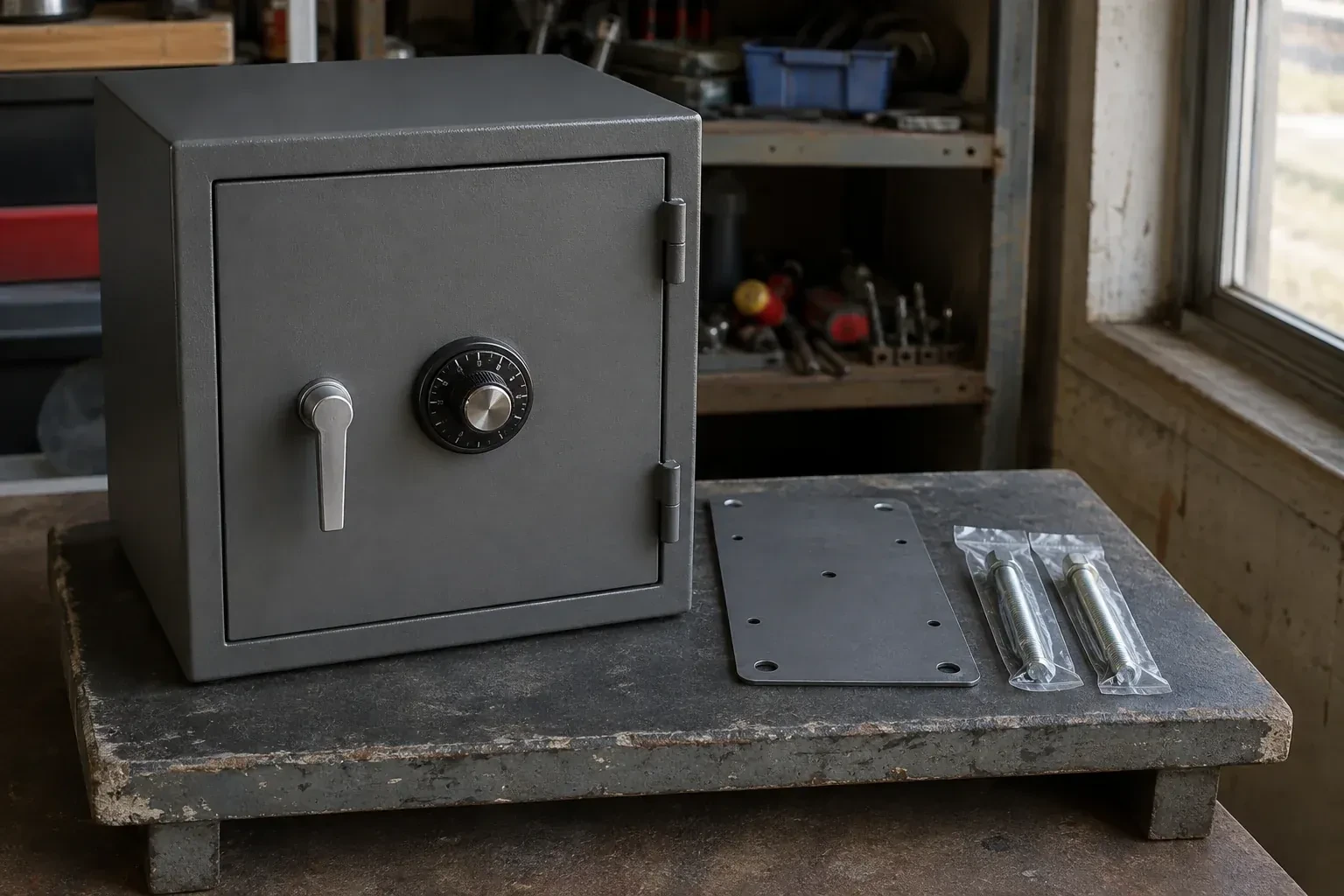
A safe that is not bolted down is not really a safe, just a heavy box that a thief can carry to somewhere quieter to open. Anchoring is the part of installation that turns a portable object into a fixed one: the floor or wall construction is identified first, correct anchor bolts and hardware are chosen for concrete or a wood subfloor, and the unit is leveled and torqued into place. The same principle applies to an existing safe discovered sitting loose in a corner; it can usually be anchored properly without moving it far.
How the visit goesA dinner service ends with a stack of bills and a handful of credit slips, and right now they sit in an unlocked cash box on a shelf until morning, because nobody has gotten around to anything sturdier.
Safe Installation & Servicing
How the visit goes
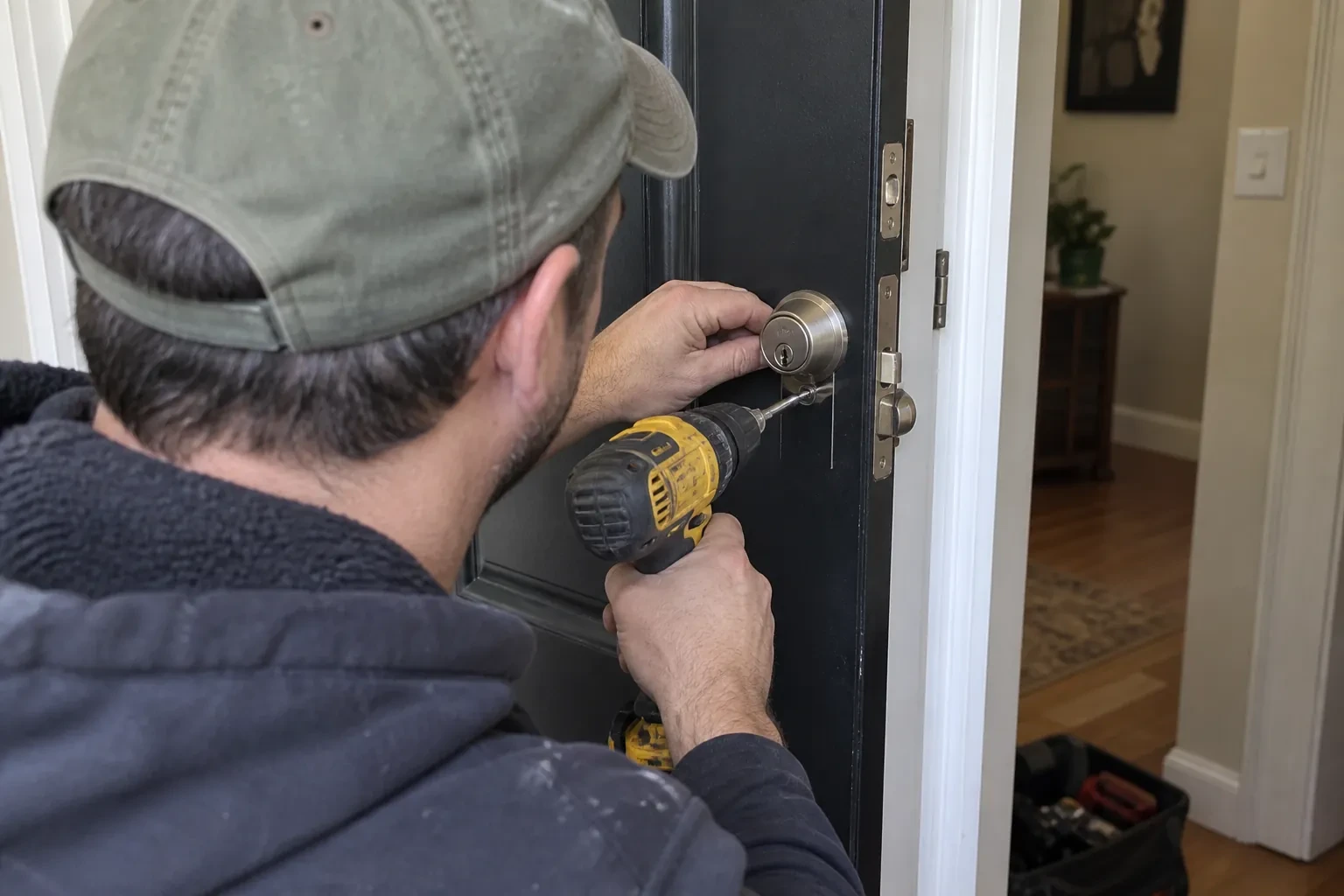
Whether the fire lining can breathe
A fire-rated interior works by trapping moisture inside its insulation, and that same airtight seal can hold humidity against paper and metal for years at a time. On a servicing visit the locksmith checks for a musty smell, damp interior panels, or documents that feel soft at the edges, all signs that trapped humidity has been building unnoticed. On a new installation, this becomes a conversation about desiccant and how often the door should be opened to let the interior air out, rather than something dealt with only after a problem appears.
Bringing an existing safe back into full working order
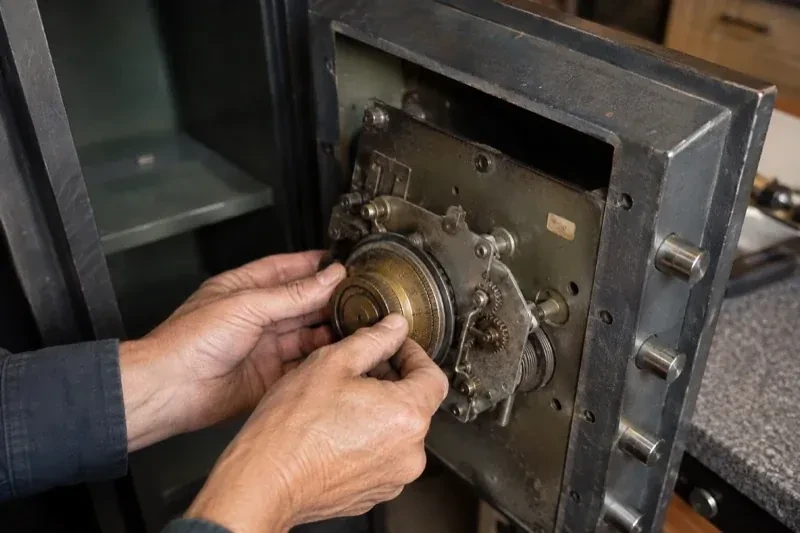
Servicing starts with the bolt-work: the mechanism is opened, cleaned of old grease and grit, and lubricated with a product suited to steel bolt-work rather than a general household oil. The lock is cycled repeatedly and adjusted if it binds or hesitates, and any handle or spindle that has worked loose is tightened. Batteries in an electronic lock are replaced as routine maintenance rather than waiting for a failure, and the door seal and hinges are checked and freed if they have picked up rust.
A combination or code that belongs only to the household or business
The final combination or code is set by the owner alone, after the locksmith has finished testing, so nobody who did the installation carries it away in their head. Writing it down somewhere other than beside the safe, or storing it with a trusted person away from the property, is worth doing once rather than relying on memory during a stressful moment. Where the lock supports more than one code, deciding now who else should have one avoids an awkward conversation later.
Safe Installation & Servicing
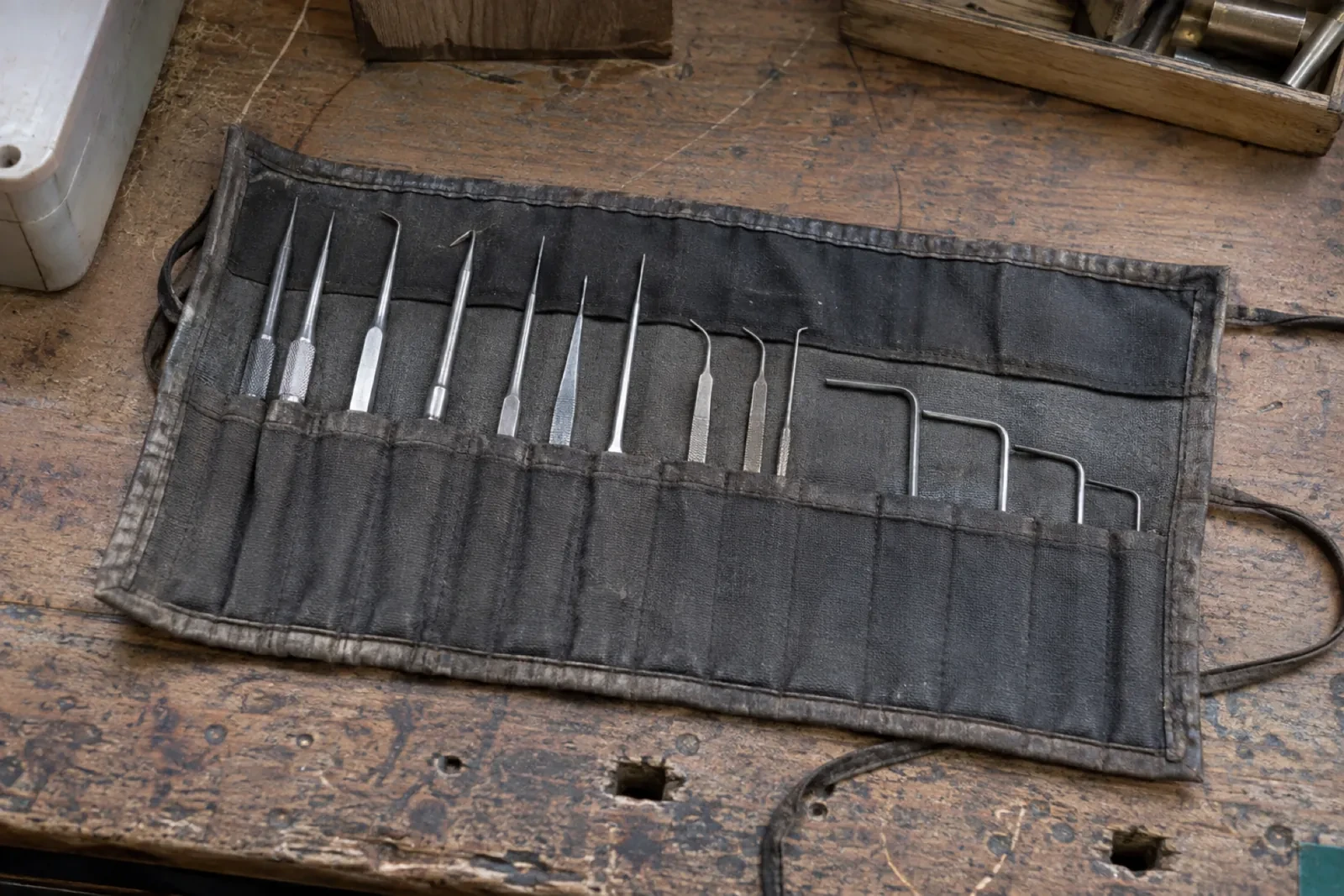
In the van
Desiccant packets
Mounting plate
Torque wrench and socket set
Rated safe (burglary and fire)
Bolt-work lubricant
Safe Installation & Servicing
What affects the quote
Floor or wall construction
Solid concrete, a wood subfloor reaching into joists, and tile each call for a different anchoring approach and different hardware, and the substrate is confirmed before any drilling begins.
Requests for concealment
Fitting a safe into a closet floor, a recessed wall cavity, or behind a built-in panel takes more planning than a straightforward open placement, and can limit which units will actually fit.
Number of safes handled in one visit
A single unit is the simplest visit, while a property with a till safe, a document safe, and a smaller personal safe in another room involves more total work in one call-out.
What to have ready
- Roughly how much does the safe weigh, if known?
- When were the batteries last changed, if it is electronic?
- Are there stairs or narrow doorways between the entrance and that spot?
Safe Installation & Servicing: questions
QuestionsHow do I prepare the room before a servicing visit?
Clearing a working space in front of the safe, moving anything stacked against or on top of it, and having a rough idea of when it was last serviced all help the visit start smoothly. If the combination or code is still known, having it on hand avoids needing to open the unit by other means first. Nothing more elaborate than that is generally needed beforehand.
How do I decide between a bigger safe now or upgrading later?
It comes down to how much the amount being stored is likely to grow over the next few years. A safe sized with some room to spare avoids an early repeat visit, while a unit sized exactly for today's needs can be outgrown within a year or two for a growing business. Anchoring and lock work do not change much with size, so the main trade-off is simply the footprint the larger unit takes up in the room.
Will anchoring damage my flooring?
Anchoring leaves small holes at the anchor points, sized to the bolts being used, and on a finished floor these sit under the safe itself where they are never seen again. On tile, the risk of cracking nearby tiles is real enough that an alternative fastening point or a different spot in the room is often chosen instead of drilling straight through the tile itself.